01 April 2010
A Good Offense is a Good Defense: We Need a Counter Narrative Conference
04 February 2010
Crossroads: Al Qaeda & Biological Warfare, Literally
As has been linked on Challenge COIN and reported on The Long War Journal, a female suicide bomber killed 54 victims this past week in Baghdad during an annual pilgrimage to Shit'ite Islam's Holy Shrine in Karbala. The event was in celebration of the end of fourty days of mourning the death of Imam Hussein. (Read a fine historical description of Hussein and the tradition in the link provided). The female was wearing an abaya, covering herself from head-to-toe and thus successfully concealing the attached explosives.
The use of female suicide bombers is not new, but the question remains whether the tactic is a trend or a part of the terrorist toolbox. The Washington Post provides a listing of female suicide bombings in Iraq, five of which have been in Baghdad. In addition, see this report by ISI on activity throughout the Palestinian region. For further research, I suggest reading studies and papers from this academic guide, according to your particular interests.
This tactic is one of the many ways terrorists pierce US and ally national security methods, but [perhaps] one of the most dangerous aspects is its direct connection to socio-cultural traditions which are grounded by religious beliefs and practices. One of my advisors while a graduate student, Jocelyn Cesari, argues that tension continues to rise between Muslims and modernity. Currently, France is experiencing a struggle, once again: Shall the law permit Muslim women to wear a burka (usually interchanged with the term, niqab, meaning "veil") while in public space? The conflict is both internal, as Muslim women believe that wearing a burka is a religious testament to their behavior of modesty, and external, as politicians and citizens share their perspectives of national culture while security professionals argue that it presents a legitimate concern.
____________________________________________________________________
*It is an important aside from the discussion to present a brief understanding of the concept(s) inherent in the belief of Muslim women wearing such clothing. For your information, even though I studied such concepts, Muslim scholars [and believers] will, on many occasions, argue that my perspective and analysis is not legitimate simply because I am not Muslim; i.e. I cannot speak Arabic and thus cannot know true interpretation. I understand this perspective, respectively.
Muslims testify the origin mainly to one of three or all three sources recited in the Qur'an. As follows, shar'iah jurisprudence and/or theological interpretation extends this practice to devout Muslim women. Scholars, and the faithful Ummah, divide on what is necessary to be and remain devout.
(1) Verse 53 of Surah Al-Ahzaab, which states (abbreviated);
"O you who believe, do not enter the Prophet’s houses unless permission is granted you, to enter by invitation...But when you are invited, enter, and, when you have had your meal, disperse...And when you ask anything of [his] womenfolk, in other words, the wives of the Prophet(s), ask them from behind a screen, a curtain. That is purer for your hearts and their hearts, than [entertaining] sinful thoughts. And you should never cause the Messenger of God hurt, in any way; nor ever marry his wives after him. Assuredly that in God’s sight would be very grave, as a sin."
(a) Scholars argue that the verse offers restrictions as well as etiquette for Muslim men when having visited Prophet Mohammad's home. Further, it is taken to mean that the Prophet's wives shall not be coveted even after his death; for visitors needed to remain pure of heart. Lastly, the message sought to, at the time, dispel any false rumors about the Prophet and/or his wives that may ridicule him, his image, and/or message.
(2) Verse 59 of the same, Surah Al-Ahzaab, which reads;
"O Prophet! Tell your wives and daughters and the women of the believers to draw their cloaks closely over themselves (jalābīb is the plural of jilbāb, which is a wrap that covers a woman totally) — in other words, let them pull part of it [also] over their faces, leaving one eye [visible], when they need to leave [the house] for something. That makes it likelier that they will be known, to be free women, and not be molested, by being approached. In contrast, slavegirls did not use to cover their faces and so the disbelievers used to pester them. And God is Forgiving, of any occasion in the past when they may have neglected to cover themselves, Merciful, to them in His veiling them."
(a) Scholars hold that this serves as a command for men to prevent social abuse on behalf of their wives. As above, it is extended to all faithful men and women who believe such behavior is devout in the name of Allah and the Ummah.
(3) Verse 31 of Surah an-Nur, which reads;
"And say to the faithful women to lower their gazes, and to guard their private parts, and not to display their beauty except what is apparent of it, and to extend their headcoverings (khimars) to cover their bosoms, and not to display their beauty except to their husbands, or their fathers, or their husband's fathers, or their sons, or their husband's sons, or their brothers, or their brothers' sons, or their sisters' sons, or their womenfolk, or what their right hands rule (slaves), or the followers from the men who do not feel sexual desire, or the small children to whom the nakedness of women is not apparent, and not to strike their feet (on the ground) so as to make known what they hide of their adornments. And turn in repentance to God together, O you the faithful, in order that you are successful."
(a) One additional point of meaning exposed here is that women could only shown themselves to close relatives, a practice believed to have originated with the Prophet.
____________________________________________________________________
Debate is on-going concerning the use of heightened security measures to prevent terrorist attacks on the US homeland vis-a-vis international and domestic flights; in particular focus is the topic of body-image scanning devices by TSA in airports. Just as professionals and analysts work hard every day to stay ahead of the morphing enemy, so too do AQ planners and operatives. Yet again, a new method uses biological implants of PETN. And yes, scientific experts believe that full-body devices will not be able to see tiny explosive packages hidden within muscle, tissue, cartilage, and/or organs.
It is a different tactic - and a step above - than that previously used by the "Butt Bomber," Ibrahim Assiri, who inserted explosives into his rectum; or the underpants bomber, Farouk Abdulmutallab. Now, Muslim doctors are returning to aid AQ after receiving top-notch medical training in Europe, this time to surgically implant PETN into women's breasts. It is probable, of course, that this tactic is not limited to women, as we should deduce that men may receive implants in, for example, their buttocks.The connection of terrorist attack methods, then, however great it is to socio-cultural factors, is also related to criminal methods used in operations such as trafficking [which my colleague, Josh, also discussed here].
So, what to do?
As I discussed previously on countering AQ's Phase IV Strategy, "...the deterioration of all US/Western economic and legal structures lies at the heart of the long-term strategic plan of AQ. This method of deterioration that causes our confusion will increasingly be paired with direct attacks on the US homeland." I established here that the deterioration is also connected to socio-cultural traditions, that which is defined/shaped in many ways by the legal and economic frameworks practiced by our great nation.
For one, we can begin by coupling information warfare with civic engagement, as my colleague, JD, argues. Internationally, it requires military campaigns that build, as my colleague, Pat Ryan, names, sharia networks.
For example, an interesting blog entry posted on the U.S. Naval Institute webpage argues that a successful counter-method would circulate propaganda amongst jihadi men (via many sources I assume) highlighting the humorous aspect(s) of biological undertakings to manipulate their ego; sexual id (Frued). It would also create dirty psychological associations in the citizen mind, which would arguably dissipate social approval. Although I do not agree entirely that all male jihadi suicide bombers are, by default, "sexually-repressed beings," I do see the value in exploiting weaknesses, either cultural and/or psychological, but emphasize the need to evaluate exactly who we are targeting so we can accurately script the information for warfare.

Can it work for female suicide bombers? We can strenthen our understanding by identifying, once more, which AQ affiliates use female suicide bombers and why.
We need to continue to be aware of the forthcoming threats facing the US homeland, as women will even pretend to be pregnant in order to hide explosives. So, it does not only require military and intelligence agency operations in regions such as Yemen, as well as national security measures taken by, for example, the US Secret Service, to examine and predict modus operandi of bombers targeting US presidents and political VIP's, but also [perhaps above all] individual and collective integrity to remain firm to the ideals of who we are, what we do, and how we do it.
No one can ever blow that up.
01 February 2010
Crossroads: Jihadi Infiltration in the US
My colleague, JD, analyzed the use of "Counter Narratives" for the establishment of federal-level engagement teams under the direction of the Department of State. Given the need for coalition building between (a) federal law enforcement and policy agencies and (b) Arab and Muslim leaders and citizens, narratives can constructively undertake information warfare.
As I discussed last Friday, it is becoming ever more clear that Al Qaeda's Phase IV Strategy incorporates attacks on US economic and legal frameworks as well as emerging US-domestic operational environments. This is being witnessed internationally, too, as the Taliban, AQAP, and Al Shabaab step-up their transnational terrorism efforts in alignment with AQCL ideology. It is in our national security interest - and the interest of the world - to prevent AQ from establishing safe havens in poor socio-economic regions; as we must protect peoples from their false promises. (See more insight on Economics and Terrorism from Abu Muqawama at CNS)
Combating jihadi propaganda through counter-narratives promises to (a) drive down AQ popularity by (b) crystallizing ethnic differences and (c) promoting collaboration to further a unified message-scheme. It will, as David Bellavia writes in his post entitled, "The Backbone of Islam," "...unmask al Qaeda" for what it really is.
The question remains, however, whether information warfare can unravel what Bill Whittle argues to be "Islamic Infiltration" in his latest report. See Part Two here.The FBI is no stranger to moles; just ask about Robert Hanssen who sold millions of dollars worth of intelligence to Soviet spies. His trecherous activies cost lives as well as billions of dollars. Then-FBI Director, Louis J. Freeh, stated in a 20 February 2001 Press Release, "This kind of criminal conduct represents the most traitorous action imaginable against a country governed by the Rule of Law."
The crossroads of US and Islamic Rule of Law and Shar'iah's interwoven elements (i.e. "Shar'iah-Compliment Finance" discussed in the link provided) is exactly what Whittle's report brings into question, and that which Frank Gaffney of the Center For Security Policy has been covering for years.
The former Department of Defense analyst quoted in Whittle's video states;
"...[O]ver a long period of time I ended up collecting a large body of Islamic law, an enormous amount of it available in English, and realized that if Islamic law is the criteria by which you measure legitimacy or illegitimacy you can’t show that the moderates have a doctrinal basis for the position they hold, and you can’t show that on the statement of the law the radicals are wrong."
As a result, the unidentified analyst argues, "...the whole [US] national security apparatus...moved from a factual, legal basis to one that supports the narratives." The juxtaposed narratives of righteous Muslims and jihadi extremists need to be understood and clarified to arrive at what is virtuous and true. This is exactly what I think JD attempted to analyze and provide a strategic framework for in order to secure US social, cultural, and political prosperity.
We ought to worry about the infiltration of jihadi ideology throughout US demographics as much as operatives within US federal agency ranks. It is the task of security professionals to divide and conquer moles; it is a separate but just as integral task of citizens to identify and report on questionable activity. This is precisely the reason why the Intelligence Community should find it in their best interest to integrate a realistic system for identifying the religious and social behaviors of radical jihadists. Civic engagament teams can help strike a balance between encouraging what is safe and identifying what is harmful, that which decays and that which prospers. Policy debates ought to surround the questions, "What is the balance of allowing and encouraging diversity of thought and practice while disrupting and dismantling jihadi propaganda?"
Increasing social and cultural awareness requires a thorough analysis of what we have been witnessing for some years now in England, France and Germany, who are experiencing emerging AQ threats as well as tensions between regional/national heritage and customs of the Muslim Ummah and Shar'iah Law. Analysts and professionals alike are bound to become more frustrated in differentiating between righteous customs and jihadi customs if we fail to deciphere between efforts of propaganda and democratic prosperity. Such work can, as I said, (a) crystallize ethnic differences and (b) promote collaboration.
In one of my upcoming posts, I will elaborate on the FBI's Community Outreach Program in order to assess how JD's engagement teams can strategically counter jihadi narratives (i.e. exposed in false sharia fatwas that are not legitimate) through civic coalitions. This will, I think, holistically strengthen the ability of CT professionals to track, monitor, and interrupt actual and/or potential moles in agency rank and file and radicals moving throughout regional areas of society.
29 January 2010
Terrorism on Trial: Countering AQ's Phase IV Strategy
The reporting, and accompanying conversation, is circling the case of Farouk Abdulmutallab, the Christmas Day, underpants, would-be bomber. The Washington Post has two articles here and here that beg us, once again, to question the interconnecting elements of terrorism with our Constitution - as well as our social fabric and the values and traditions celebrated by them.
You may read complimentary articles on Khalid Sheikh Mohammed's (KSM) trial from the NY Times, and/or the implications for our prison population (that I discussed previously in the link provided) from the Philadelphia Inquirer.
I propose beginning with the U.S. Constitution, in particluar Article I, Section 8, which establishes the right of Congress "to constitute Tribunals inferior to the Supreme Court." Moreover, the definition of "Piracies and Felonies committed on the high seas" should be understood to descriptively include Terrorism committed on land, seas, and air. Such an alteration can successfully give way to "make[ing] Rules concerning Captures on Land and Water" which shall also include airspace.
The intention and purpose is to provide the preservation of liberties and protection of their daily engagements of, by, and for U.S. citizens.
On this last point, cases such as Abdulmutallab and KSM's raise the importance of the possible utilization of habeas corpus if/when not suspended during terrorism trials. Article I, Section 9 states, "The Priviledge of the Writ of Habeas Corpus shall not be suspended, unless when in Cases of Rebellion or Invasion the Public safety may require it."
Please see legal information of U.S. Code, "the codification by subject matter of the general and permanent laws of the United States," pertaining to habeas corpus here.
It is clear in the language used by the drafters and signers of the Constitution that the Founding Fathers, Statesmen, and citizens framed their arguments according to the possible perils they faced on land and water. As such, the definition of "making rules" for capture followed the logic inherent in their own language. Thus, "terrorism" is not mentioned and/or defined simply because the trecherous activity was not in and on the minds of the US leaders and citizens.
As we all have known for some time, US leaders and citizens face threats unfamiliar and unimaginable to the Founders. In light of the practicality sought by the Obama Administration on matters of law and terrorism, it is of utmost concern to raise further questions bound to the aformentioned constitutional concepts.
Firstly, what is the meaning of the independent right to life as a US citizen, and the adjoining rights possessed by one's citizenship? Amendment XIV, Section 1 grants to citizens naturalized rights. If terrorists are granted miranda rights, tried in civilian court [and convicted or acquitted], then by default what other rights shall be granted to suspected terrorists? Common sense tells me that constitutional rights grant me equal protection of the laws, but that equality can not be shared by foreign, enemy combatants.
Secondly, shall the US provide comprehensive rights to suspected terrorists being tried in civilian court? Amendment VI grants persons being tried in criminal prosecutions, for example, the right to a speedy trial and public trial. This must be judged by an impartial jury. Shall we also, then, apply the Brady rule if a terrorist or his/her [public] defender think evidence was withheld? (Also see Brady and its probable implications for terrorism trials here and here). Common sense tells me that the circumstances particular to a US citizen's trial rightfully imply a speedy, public trial, but that presumption of innocence can not be prescribed to foreign, enemy combatants.
Thirdly, and lastly, if suspected terrorists are granted any amount of rights also held by US citizens (gained through birth or application), when are the accused terrorists in fact charged with treason as holders of US rights? Article III, Section 3 states that all persons "levying War...or in adhering to Enemies, giving them Aid or Comfort" shall be charged with treason. Common sense tells me that the Attainder/Conviction of treason leads back to the situation suspected foreign terrorists face in the first place: "The loss of all civil rights by a person sentenced for a serious crime."
It is important to note that an attainder can apply to both an individual and group. According to the Constitution, an attainder results in the sentencing of the convicted to death.
The argument is being made that "broad consensus" holds that terrorism trials are best decided on a case-by-case basis (pg. 5). Must we, then, form courts and complimentary structures, systems, and procedures to meet the demands of such variety? For example, what is the difference in trying US citizens compared to enemy combatants when considering Al-Awlaki, a US-born, AQAP, radical Islamic cleric? What ought we to say about or how ought we to decide on Nidal Hasan or Abdulhakim Muhammad?
Margaret Thatcher said in a 1981 speech, "To me consensus seems to be the process of abandoning beliefs, principles, values and policies in search of something in which no one believes, but to which no one objects—the process of avoiding the very issues that have to be solved, merely because you cannot get agreement on the way ahead."
Sadly, I think the deterioration of all US/Western economic and legal structures lies at the heart of the long-term strategic plan of AQ: It is what makes us great, and that which AQ seeks to attack. This method of deterioration that causes our confusion will increasingly be paired with direct attacks on the US homeland. We have the will and the power to prevent both; to protect, preserve, and prosper.
22 January 2010
Rehabilitation for Al Qaeda: The Limits of Soft Counterterrorism
On 14 December, 2009, Secretary of State Hillary Clinton designated AQAP as a foreign terrorist organization. This step is important for two reasons: a) it enables the U.S. to target and prosecute AQAP members and their network affiliates; and b) it opens the door for further cooperation with the Yemeni Government. For example, officially adding top-tier leaders such as Nasir al-Wahishi and Said al-Shihri, as well as al-Zindani, to the F.B.I.'s Most Wanted List empowers the Department of Justice to work in cooperation with President Salih's Prime Minister for Security and Defense, Rashad Muhammad al-Alimi along with others.
The work is already beginning, as Clinton has met with Foreign Minister Abubakr al-Qirbi to discuss effective ways to "control [Yemen's] borders, conduct counterterrorist activities, [and] improve services to the people of Yemen. But, it is imperative to note, as al-Qirbi stated earlier, that "Yemen welcomes U.S. and foreign troops for training, intelligence and logistical support." In confirmation of this, President Obama has stated repetitively that "grounds troops" will not be sent, and the US is only seeking to further aid the host nation with its capabilities and resources throughout 2010 as General Petraus says here.
Christopher Boucek of the Carnegie Endowment reiterates al Sahwa's perspective that a successful counterterrorism strategy must be holistic, and adds that professionals have reason to conduct a "greater evaluation" of soft security measures such as psychological rehabilitation programs that incorporate prevention and aftercare methods. He quotes that the program now being used by the Saudi Arabian Government, which has treated 3,000 prisoners, boasts an 80-90% success rate. Such a program surely promises a multi-disciplinary approach to combating extremism, but is it a viable aspect of a comprehensive strategy?
U.S. local, state, and federal police organizations have traditionally used rehabilitation methods to combat gang-warfare and culture in order to protect citizens and families and prevent socio-economic hardship. Speaking in terms of statistics alone, 80-90% is not successful or promising when considering the objective of defeating Al Qaeda. When the percentage is applied to both criminal gang activity and international/transnational terrorist jihad, it simply means that 1-2:10 persons remain either committed to or openly vulnerable to becoming committed once again to carrying out micro and/or macro attacks.
At first glance, soft counter-terrorism methods offer only a positive perspective and limited promise for realistic results. It is positive because it does give reason to evaluate further as Boucek argues, but it is limited because a) it may only work for certain regional populations and/or b) it has proven to work only to a certain degree.
As Bill Roggio examines on LWJ, Shihri himself was released from Guantanemo Bay in 2007 and wasted no time getting back into the game. Furthermore, an interesting article in Foreign Policy (15 January, 2010) entitled, "Camp Nowhere," states;
"Indeed, between 2000 and 2005, the Sanaa government supported a rehabilitation program for its own prisoners, the Yemeni Committee for Dialogue...Reports suggest that several graduates returned to their violent ways, many of them in Iraq. Moreover, plans for renewing and improving deradicalization efforts [through religious dialogue and reintegration into society] are still in the very early stages."
The fact that even a small percentage returns to jihad is enough reason to not implement such a program into the holistic and comprehensive strategy. Moreover, as I learned in my "Crisis Management" course while an MBA student, it is not always the amount of times an event happens but the severity of one event happening that results in broader disruption and/or destruction. The return of 1-2 AQ fighters is enough to determine the global impact of its network; for these members spread harm on many fronts.
The implications inherent in the philosophy of soft counter-terrorism techniques begets the argument once more that "Al-Qaeda is an organization to be destroyed, not to be negotiated with in any manner..." President Obama, Secretary Clinton, and participating agencies such as the FBI can successfully protect America by "continuing to press the Yemenis to defeat al-Qaeda, not to talk with them."
After further assessment, soft counter-terrorism methods seem to not dismantle a terrorist's personal and group willingness - and if I may say, inner yearnings. Another case paramount to understanding the dynamic which we are facing is that of Othman Hadi al-Umari, an AQ weapons smuggler who surrendered to Saudi Arabia authorities in 2004. He was, at the time, number 25 of 26 on their most wanted list. Al-Umari (also written Omari) "renounced his earlier thinking but later rejoined the organization and was captured [in 2009] with the cell of 11 terrorists" The Interior Minister has affirmed that AQ uses the rehabilitation program to further their ideological objectives, stating that "Al-Qaeda has managed to lure back about 11 returnees from Guantanamo that had benefited from the programs."
In conclusion, despite the return rate of "rehabilitated" terrorists to jihad, psychological programs cannot be implemented into a comprehensive strategy at this time but need to be explored further so that the US and host nations can identify successful soft counterterrorism techniques to evaporate jihadi extremism and prevent radicalization amongst the youth populations. I argue, above all proposals, that educational programs promise the greatest deliverance from ideological growth and violent activity. This is where such a program can be as effective as police-oriented gang programs.
As an aspect of my next post, I plan to discuss the effectiveness of the F.B.I.'s Community Outreach Program (C.O.P.) and its opportunity to integrate business networking, educational institutions, and religious communities to combat terrorism. The analysis will be important for understanding further how host nations such as Yemen can potentially implement a framework for community programs to aid in the disruption of AQ networks.
For now, "The economic issue is key to Yemen's challenge in shutting down al Qaeda -- not just in re-educating militants, but in preventing militancy." It is evident that in order for this to be successful, the US and Saudi Arabia must aid in the stabilization of Yemen's economy, as I discussed here.
15 January 2010
The Exchange: Stay Ahead of the Cycle in Yemen
AQ's ability to plan and execute either small or large-scale attacks relies on their own economic stability; i.e. funding. "Truly hobbling a large, stable economy is likely to be beyond the means of most terrorist groups. However, a variety of potential terrorist operations could produce sufficiently...sizable numbers of casualties and damage or destroy large amounts of property..." It is important to identify that the objectives of AQ are witnessed in two ways, namely, to generate a) broad disruption and/or b) large-scale destruction.
Conditions such as these have caused both the US and international agencies, such as the UN, to provide financial, nutritional, and military support. As I discussed with US Operation Restore Hope, scenarios as the one Somalia and other countries face - as they have faced in the past and continue too now - can be miscalculated and result in financial loss and/or military conflict. As The Economist article states, "The world's most failed state, regrettably, threatens to become a bigger problem for the rest of the world."
Sadly, this theory holds true, as the 2009 worst country on earth was none other than Afghanistan. Michael E. O'Hanlon, Director of Research and Senior Fellow of Foreign Policy at The Brookings Institute, identified Afghanistan as the first crisis region in a report entitled, "Four Global Crisis Spots." He discusses the strategic opportunities for the US as well as the multi-disciplinary resources needed to counter terrorist growth, increased violence, and social and economic hardship.
Mr. O'Hanlon's former colleague (Vice President and Director of Foreign Policy, 2006-2009) and now US Ambassador to Mexico, Carlos Pascual, has recently co-authored "Confronting Poverty" with Susan E. Rice - (December 2009). He argues that due to the connections between poverty and fragile states, "alleviating poverty and shoring up weak states are not only humanitarian and economic imperatives, but key components of a more balanced and sustainable US national security strategy." The "War on Terror" has taught us - and shown us over and over again more than we like - that the most sustainable US strategy should not focus on singular states but interconnecting states within a region, as AQCL is now affiliated with terrorist and criminal organizations operating throughout regions like a spider. It is a chess game.
The most effective counterterrorism strategy, then, is forward thinking, matrix-like, and multidimensional, especially when combating a morphing and expanding ideology and image, tactics and strategies. My colleague, Pat, makes a fantastic point, stating: "As we consider the future of irregular warfare and terrorism, it’s critical to monitor the threat posed by regionally-based terrorist groups who become increasingly mobilized in line with a global Islamist ideology." Pascual/Rice argue that the US needs to "invest in poverty alleviation and capacity building in weak states to break the vicious cycle of poverty, fragility, and transnational threats." If The Economist's theory holds true again, then we need to act now in order for the cycle not to worsen in Yemen; for our common human experience alone shows that once the cycle begins it is rarely broken but only slowed or subdued.
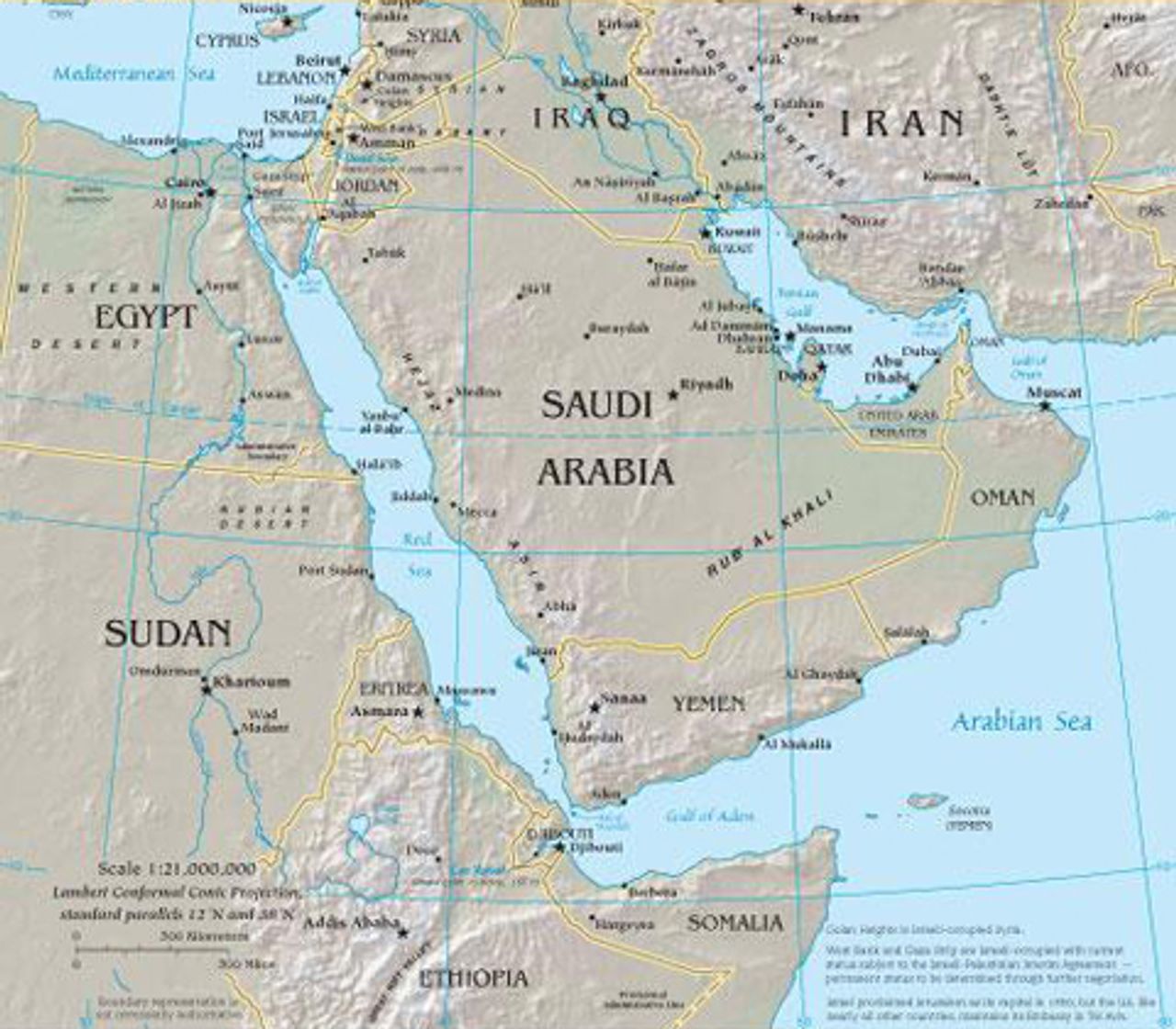
We need to stay ahead of the emerging, developing, threat of Yemen becoming the fertile land of AQCL and/or affiliates. As a result, AQAP and Al Shabaab, and perhaps AQIM's, tentacles will grow: The region will become within the next decade the haven for AQ to plan micro and macro terrorist plots targeting economic activities and networks to generate broad rupture and/or large-scale destruction. Al Sahwa does not want Yemen to be the worst country on earth in 2011. If so, then criminal activities such as trafficking will regularly occur like it has in Afghanistan and social displacement will increase as witnessed in Somalia. As stated before, the scenario "threatens to become a bigger problem for the rest of the world."
In conclusion, Yemen is directly connected to Afghanistan and Pakistan; it is gradually becoming the rook of AQ. In order to stay ahead of the cycle in Yemen, the US needs to win The Exchange by taking the rook and using the knights (Iraq, Afghanistan - forking) and the bishop (Pakistan - endgame) to our advantage: We will set ourselves in a strategic location to successfully disrupt, dismantle, and work towards defeating the morphing and expanding AQCL and affiliates.