Showing posts with label al Shabaab. Show all posts

13 March 2010

Terrorists Dream of the Islamic State: Geostrategic Ideology of AQIM


*Before you read this, I encourage you to brief the first section of this series discussing the emerging "forking strategy" of terrorists in the region; how they move, plan, and organize. Here, I focus particularly on the heightened operational tactics of Al Qaeda in the Islamic Maghreb (AQIM) to strenghten my analysis on the connecting ideological strands of AQCL affiliates, Al Shabaab Mujahideen Movement (ASMM) and Al Qaeda in the Arabian Peninsula (AQAP).


Introduction: AQIM Ideology

I first promised to publish this second part only days after the initial post, but found the research I was conducting to be so facinating while attempting to, at least to some degree, put the pieces together that I continued to read more deeply. Today is an opportune time to finally share some of my thoughts and analysis: Yesterday AQIM, reported by Evan Kohlmann at IntelTweet, released their Spanish hostage, Althea Gamit whose kidnapping was confirmed in an official statement made by Andalusia Institute for Media Production in 2009.

AQIM, formerly known as the Salafist Group for Call and Combat, whose operations focus on Algeria, Mali, Mauritania, Niger, Chad, Senegal, and Nigeria, has seemingly showcased their heightened operational methods, at least concerning this recent kidnapping case. Previously, captured tourists have been
used for ransom - perhaps to drive their drug trafficking. Further evidence: "GSPC militants kidnapped thirty-two European tourists traveling in the Algerian Sahara in February 2003. The ransom paid for their release is unknown but estimated to be from $5 million to as much as $10 million; the group may have used these funds to purchase surface-to-air missiles, heavy machine guns, mortars, and satellite-positioning equipment."

In contrast, Gamit's release is ideologically based, not logistically-centered in criminal/terrorist respects: Gamit was forced to convert to Islam as a fulfillment of their "agreed" terms.

Ideology --> Tactics

But I will be wrong, I think, to not connect the ideologically-driven method to the logistical goal: The terrorist group is positioning it's prowess in the region to support what they believe is the necessary return to the Islamic State, dar al-Islam, the pure reign of the Prophet Mohammad. In this way, the mandate to follow and obey religious governance dictates cultural practices and customs as well as fosters the growth of avenues for economic prosperity and political influence (which, AQIM continues to prove, will be pursued and gained vis-a-vis violence).

Such activity is clearly evident of an offensive jihad campaign, and perhaps one can argue a strategy including offensive daw'a. The actions spotlight a sense of mission itself that is thought to be the anecdote to the conventional Western pursuit of progress, which is thought be rooted in injustice, oppression, self-interest, exploitation, and usurpation: The leaders are driven by the burning desire that returning to the Islamic State is arriving. Islam, to AQIM and other affiliates like ASMM that I covered in Part I, is the answer, and all means of offensive tactics - mostly violence - will be used to pave their arrival to supremacy.

I will discuss in more depth in one of my follow-up posts an historical analysis of the four Caliphs (Caliphate) in order to provide further perspective on how AQIM, ASMM, and AQAP may understand themselves in relation to the Prophet. For now, in short, let me name the offensive procedure by which such terrorist groups, especially AQIM as witnessed by their "release" of Gamit, will continue to structure jihad to ensure a returning to economic, political, and religious purity. During the expansion of the Caliphates, Islam was spread in part through military conquests that rested on three ("just") principles when engaging the non-believer:
  1. Offering to surrender and convert to Islam, as it means to surrender to the will of Allah;
  2. If not, then opposing party(ies) pay tax, jizya, and in return granted dhimma (protection) by Muslim rulers for recognizing Islam's superiority;
  3. Lastly, if not still, then party(ies) defeated by offensive force as result of choice not to comply; thus subjecting all persons to death or rule (if survived) and institution of the holistic governing framework .
AQIM and AQCL affiliates, in general, do not follow this procedure in a lock-step process. In fact, they quickly skip to the end. Gamit's situation is uncommon, but important to understand in the larger AQ movement as I will elaborate below. Before I present methods of expansion, please bear with me on two important points concerning the above procedure:

a) There is need to recognize the argument deconstructing the historical meaning of such principles, highlighting that a non-believer, in traditional terms, means only one who believes in no Deity; whereas, Christian and Jew are "brothers" in the monotheistic faith, known as Ahl al-dhimma. The traditional term used here, brother, is not equal to the meaning of the word, akh, akhoya. Cesari's argument, which I described in short in Part I of this series, is important here in explaining AQIM's (and ASMM, AQAP) ideologically-driven tactics because of the tension between terrorism and modernity - the struggle between "returning" and progressing.

b) I always argue, and try to consistently make it clear, that AQCL and AQ affiliates define meaning based on their own narrow interpretation of Islam; therefore, it is understandable that they target all who fall outside of this narrow framework. Non-believer, in this sense, is not similar in meaning to an historical and theological understanding embraced by true, peaceful Muslims. (This may seem a vague explanation, but it rests on takfir: It is my small attempt to define AQ as outside Islam, and this could help Roberts' argument that AQ is an "outsurgency").


Tactics --> Environment(s)

Accordingly, not only groups like Christians and Jews fall outside of their framework as non-believers, but so too Muslims and others alike. So, the operational environment is not entirely defined by geographic latitudes and longitudes but by an ideological vision. Captain Russell J. Isaacs informs us in his work, The North African Franchise: AQIM’s Threat to U.S. Security - Strategic Insights, Volume VIII, Issue 5 (December 2009) - that the historical development of AQIM is a security threat to US facilities and personnel in Europe, Iraq, and Afghanistan as well as to Europe itself (I provide excerpts here):
  • Today, AQIM operates a widespread and coordinated structure across Europe. While the majority of their attacks and operations occur inside Algeria, AQIM maintains a widespread network of financial support and direct action cells outside the country. Terrorism analysts estimate that several dozen cells exist across Europe, primarily in France, Germany, Spain, Italy and the United Kingdom.
  • A major task of AQIM cells in Europe is the financial support of the group’s operations worldwide. AQIM’s primary means of finance are car theft, credit card fraud, document forgery and the active seeking of donations. AQIM is extremely successful collecting donations in Europe...
  • Another focus of AQIM cells in Europe is recruiting Algerian immigrants to fight. French authorities assert that several AQIM cells within France are actively recruiting volunteers for...jihad. Moreover, Spanish media outlets reported in April 2007 that AQIM supporters were collecting funds and recruiting volunteers for terrorist training in the mountains of Algeria. A final focus of AQIM in Europe is the planning and execution of attacks against European targets. AQIM does not hide its intention to carry out attacks against European targets. In February 2005, for example, Al Qaeda leader Ayman Zawahiri urged AQIM to be a “bone in the throat of American and French crusaders.
The vision is tied, I think, to OBL's messages (regardless of his actual involvement and/or approval; he mostly issues statements to maintain his own image as the Serpent Head), but more importantly to, for example, Saed Elshari, AQ's number two in the Arabian Peninsula;
"I swear to God, we will open up for them doors of hell on the ground, which will be the key to our victory, where we will cut the tails of the crusaders; destroy the dreams of crusade and ruin the desires of the Jews in the region."
Also, we can consider Gadahn's latest message, which seeks to recruit American-Muslims to act as Hasan did against Western "crusaders;"
"We must erode our cowardly enemy’s will to fight by killing and capturing leading Crusaders and Zionists in government, industry and media who talk the talk but don’t walk the walk and are only interested in prosecuting their profitable wars as long as it’s other people who are in the line of fire and not them...And finally, we mustn’t allow our lawless enemies to provoke us with their evil, sadistic and murderous crimes into crossing the boundaries laid down by Allah and His Prophet or doing anything which may have negative repercussions on the image of the Jihad and reputation of the Mujahideen."

The connection highlights that the regional tactics of AQIM may differ, in degree and manner, to AQAP and ASMM, but the vision is interwoven; it is a singular ideology that is global although environmentally dispersed. We may have cause to apply a rule to AQ regional operations: As I have stated, ideology --> tactics --> environment(s). But this still leaves the odd situation of Gamit: Why did they force him to convert? All AQCL affiliates focus predominantly on violent campaigns which they consider to be defensive, but AQAP and ASMM have not used convergence tactics before (to my knowledge). It is documented as early as 2002 that AQCL under OBL has, having stated in, A Letter to the American People:

(1) The first thing that we are calling you to is Islam.

(a) The religion of the Unification of God; of freedom from associating partners with Him, and rejection of this; of complete love of Him, the Exalted; of complete submission to His Laws; and of the discarding of all the opinions, orders, theories and religions which contradict with the religion He sent down to His Prophet Muhammad (peace be upon him). Islam is the religion of all the prophets, and makes no distinction between them - peace be upon them all.

It is to this religion that we call you; the seal of all the previous religions. It is the religion of Unification of God, sincerity, the best of manners, righteousness, mercy, honour, purity, and piety. It is the religion of showing kindness to others, establishing justice between them, granting them their rights, and defending the oppressed and the persecuted. It is the religion of enjoining the good and forbidding the evil with the hand, tongue and heart. It is the religion of Jihad in the way of Allah so that Allah's Word and religion reign Supreme. And it is the religion of unity and agreement on the obedience to Allah, and total equality between all people, without regarding their colour, sex, or language.

(b) It is the religion whose book - the Quran - will remained preserved and unchanged, after the other Divine books and messages have been changed. The Quran is the miracle until the Day of Judgment. Allah has challenged anyone to bring a book like the Quran or even ten verses like it."

It is obvious this "offering" came after September 11, 2001. So, once again, the lock-step process was not followed but still serves as a framework for justification.


Counter Operations

In short, the US and its allies, I think, do not yet have a comprehensive counter narrative that seeks to erase AQ legitimacy in terms of ideology. Gamit's conversion to Islam, which I would hold is not actually a conversion to Islam but only a recognition of AQIM's narrow definition and interpretation of the meaning of their version in alignment with AQCL's version, provides another opportune time for the US to define and articulate in a clear, concise, and consistent way a counter-narrative that targets AQIM, ASMM, and AQAP leaders. Such an employed tactic, Information Operations, would aid both foreign diplomacy that deeply and rightly involves legitimate Muslim nations and actionable intelligence missions to dismantle AQ logistical tactics in expanding AQ operational environments.

I propose here, as I have promoted before, a targeting strategy focusing on middle-tier personalities: They provide not only training but ingrain identity of both individual persons and collective groups in alignment with ideology throughout an entity. I think HUMINT can be done throughout Europe, but we can follow the money trailing their drug trafficking and financing avenues.

Please share your insights, as we all need to work together to procure our freedoms home and abroad and disrupt, dismantle, and defeat AQ.

02 February 2010

Terrorists Dream About The Islamic State: Al Qaeda, Al Shabaab, & Beyond

*This is the first section of a two-part post, the second of which I plan to publish later today. Here, I focus my efforts on identifying the expansion of terrorist operational environments as represented in the relationship between the Al Shabaab Mujahideen Movement and al-Qaeda's morphing strategy.

Yes, terrorists groups dream about establishing an Islamic State; for it is not only a fantasy but a mission they seek to achieve through endless jihad, The Long War. If the US and its allies understand clearly how terrorists groups like Al Shabaab understand themselves as a part of the self-perceived "infidel" conflict, then there is valid reason to think that analyts and professionals can accurately project their strategic intentions and operational objectives.

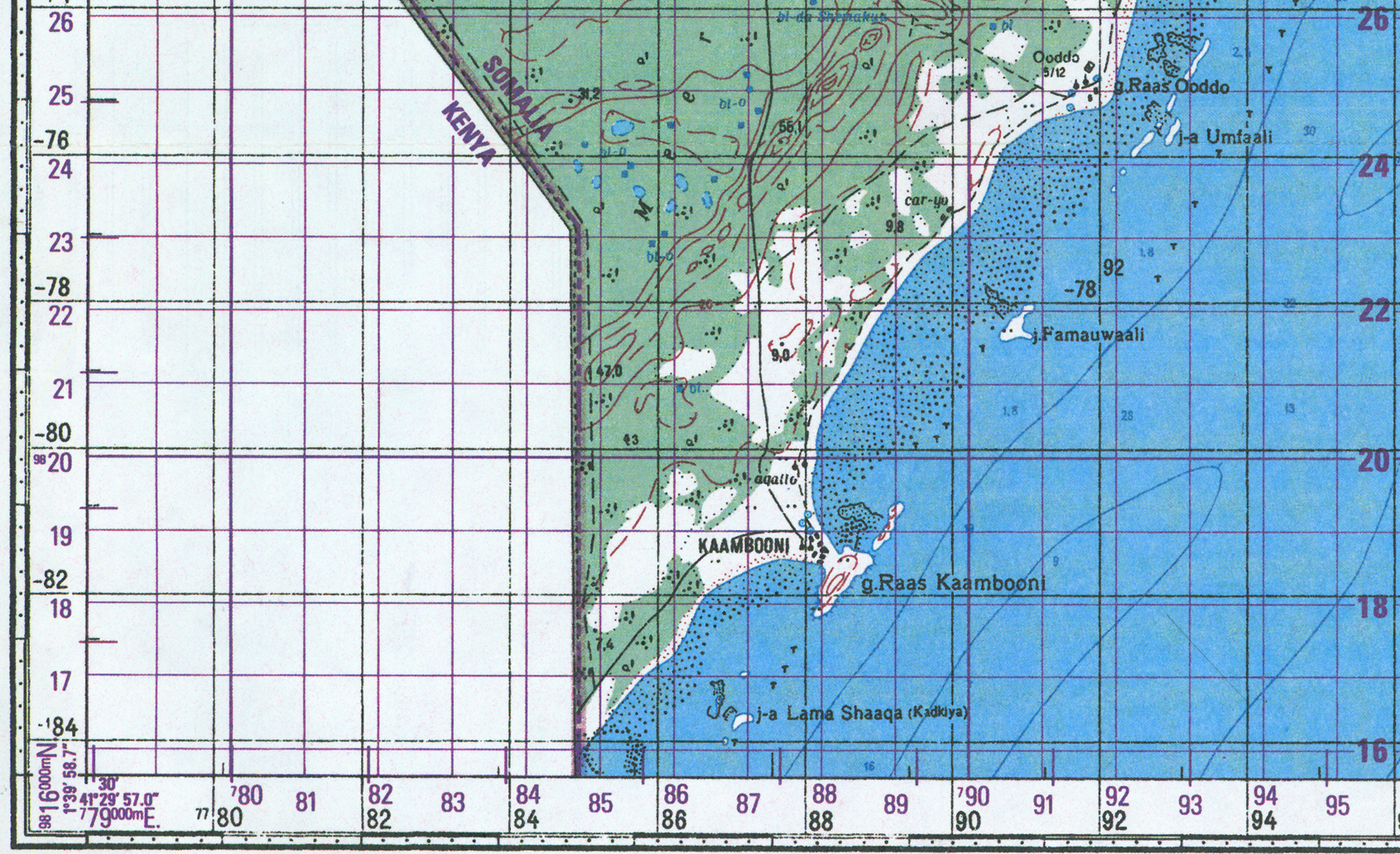
Bill Roggio of the Long War Journal reported that the Ras Kamboni Camp (Raas Kaambooni), led by Hassan Turki, of Hizbul Islam was absorbed by Al Shabaab . (It comes as no surprise that the information was reported in Sweden from Al Qimmah Forum, as financier Ali Yassin Mohamed reportedly resided in Stockholm. See how the country is experiencing a "little Mogadishu"). The announcement declared two things; that,
(a) Al Shabaab is a part of the international jihad led the the network of Al Qaeda [and]
(b) The Al Shabaab Mujahideen Movement and the mujahideen of Ras Kamboni Camp today merged under one name: Al Shabaab Mujahideen Movement (ASMM).

The two organizations have been fighting one another throughout the ending months of 2009 over the control of the Port of Kismayo in southern Somalia. The successful merger now splits Hizbul Islam, leaving three remaining original members to fight for themselves;
(1) Alliance for the Re-liberation of Somalia (ARS);
(2) Jabhadda Islamiya Somalia, a.k.a. Islamic Front of Somalia (JIS);
(3) Mu'askar Anole;
all of who are connected to the Islamic Courts Union (ICU) which I mentioned in my analysis on the US/UN Operation Restore Hope.

With a blended unification of ideology, the overarching goal is two-fold: To rid the region of "enemies of their religion," who ASMM believes to be both Ethiopian forces aided by the US, and institute an Islamic State in Somalia. Moreover, it identifies their forthcoming ability to join operational tactics and expand operational environments, both within Somalia and transnationally vis-a-vis supporting campaigns with, for, and by AQCL. Of great concern also is the newly-formed organization's prospective capacity to manipulate regional resources, such as Uganda’s oil reserves or Lake Victoria near-by, and/or utilize geographical avenues for trafficking activities as they have done in the Gulf of Aden.

Despite the internal conflicts between Al Shabaab and Hizbul Islam historically, their recent formation testifies to the dangerous, morphing method of expansion by AQ-affiliated terrorist groups in the region. A recent RAND report entitled, "Radical Islam in East Africa 2009," acknowledges this growing trend and the emerging implications, stating;
"East Africa has been a sanctuary and base for Islamist terrorist operations since the early 1990's and remains a priority area in al-Qaeda's global strategy...Although al-Qaeda represents the primary terrorist threat to US interests in East Africa, it is only one component of a much larger universe of radical Islamist groups and organizations in the region. There are numerous indigenous radical Islamist groups in East Africa with varying degrees of affinity to al-Qaeda's agenda. In addition, missionary groups...are actively propagating a radical, fundamentalist, Salafi interpretation of Islam that, while not necessarily violent, function as gateways to terrorism...The weakness of African governments and the internal fighting and corruption of these regimes facilitate the ability of terrorists to move, plan, and organize."

The larger picture sets ASMM and AQAP as singular but interconnecting movements across the chessboard, the entire AQCL operational environment. Each entity of the bigger organization is morphing into con-joining units like a serpent tongue: The main portion belongs to the snake but the ends are separated like a fork. As I stated on 15 January, a "fork" is a chess tactic using one piece to attack two or more pieces. It is a critical to AQ's forked tactical ability - how they "move, plan, and organize" - to expand rapidly. Al Shabaab and Hizbul Islam's merger showcase AQ's ability to spread eastward toward AQAP in Yemen and westward toward AQIM in North Africa, as these geographic locations are key to the "exchange."

It is a strategic necessity for the US to take aim at middle-tier personalities [while they exist] in order to disrupt and dismantle affiliate operations. History's lesson of the mujahideen throughout Africa and the Arabian Peninsula offers some intriguing evidence of what "dream-like" expansion seems to be on the horizon in terms of the jihadi operational environment.

01 February 2010

Crossroads: Jihadi Infiltration in the US

*Disclaimer: The information provided for readers in this posting does not serve as either my personal or professional advocation for the work and/or the views expressed by the authors and/or participants in association with the work undertaken. It is provided objectively as a resource for exploring information and perspectives in order to arrive at the truth. Furthermore, those that mistake my concluding points as arguments against the Muslim community are wrong; I simply intend to focus my analysis on the threat of jihadi persons and groups within US communities and agencies, not the Muslim Ummah and their social, cultural, political, and religious beliefs, traditions, customs, and structures.

My colleague, JD, analyzed the use of "Counter Narratives" for the establishment of federal-level engagement teams under the direction of the Department of State. Given the need for coalition building between (a) federal law enforcement and policy agencies and (b) Arab and Muslim leaders and citizens, narratives can constructively undertake information warfare.

As I discussed last Friday, it is becoming ever more clear that Al Qaeda's Phase IV Strategy incorporates attacks on US economic and legal frameworks as well as emerging US-domestic operational environments. This is being witnessed internationally, too, as the Taliban, AQAP, and Al Shabaab step-up their transnational terrorism efforts in alignment with AQCL ideology. It is in our national security interest - and the interest of the world - to prevent AQ from establishing safe havens in poor socio-economic regions; as we must protect peoples from their false promises. (See more insight on Economics and Terrorism from Abu Muqawama at CNS)

Combating jihadi propaganda through counter-narratives promises to (a) drive down AQ popularity by (b) crystallizing ethnic differences and (c) promoting collaboration to further a unified message-scheme. It will, as David Bellavia writes in his post entitled, "The Backbone of Islam," "...unmask al Qaeda" for what it really is.
The question remains, however, whether information warfare can unravel what Bill Whittle argues to be "Islamic Infiltration" in his latest report. See Part Two here.
The FBI is no stranger to moles; just ask about Robert Hanssen who sold millions of dollars worth of intelligence to Soviet spies. His trecherous activies cost lives as well as billions of dollars. Then-FBI Director, Louis J. Freeh, stated in a 20 February 2001 Press Release, "This kind of criminal conduct represents the most traitorous action imaginable against a country governed by the Rule of Law."

The crossroads of US and Islamic Rule of Law and Shar'iah's interwoven elements (i.e. "Shar'iah-Compliment Finance" discussed in the link provided) is exactly what Whittle's report brings into question, and that which Frank Gaffney of the Center For Security Policy has been covering for years.


The former Department of Defense analyst quoted in Whittle's video states;
"...[O]ver a long period of time I ended up collecting a large body of Islamic law, an enormous amount of it available in English, and realized that if Islamic law is the criteria by which you measure legitimacy or illegitimacy you can’t show that the moderates have a doctrinal basis for the position they hold, and you can’t show that on the statement of the law the radicals are wrong."
As a result, the unidentified analyst argues, "...the whole [US] national security apparatus...moved from a factual, legal basis to one that supports the narratives." The juxtaposed narratives of righteous Muslims and jihadi extremists need to be understood and clarified to arrive at what is virtuous and true. This is exactly what I think JD attempted to analyze and provide a strategic framework for in order to secure US social, cultural, and political prosperity.

We ought to worry about the infiltration of jihadi ideology throughout US demographics as much as operatives within US federal agency ranks. It is the task of security professionals to divide and conquer moles; it is a separate but just as integral task of citizens to identify and report on questionable activity. This is precisely the reason why the Intelligence Community should find it in their best interest to integrate a realistic system for identifying the religious and social behaviors of radical jihadists. Civic engagament teams can help strike a balance between encouraging what is safe and identifying what is harmful, that which decays and that which prospers. Policy debates ought to surround the questions, "What is the balance of allowing and encouraging diversity of thought and practice while disrupting and dismantling jihadi propaganda?"


Increasing social and cultural awareness requires a thorough analysis of what we have been witnessing for some years now in England, France and Germany, who are experiencing emerging AQ threats as well as tensions between regional/national heritage and customs of the Muslim Ummah and Shar'iah Law. Analysts and professionals alike are bound to become more frustrated in differentiating between righteous customs and jihadi customs if we fail to deciphere between efforts of propaganda and democratic prosperity. Such work can, as I said, (a) crystallize ethnic differences and (b) promote collaboration.

In one of my upcoming posts, I will elaborate on the FBI's Community Outreach Program in order to assess how JD's engagement teams can strategically counter jihadi narratives (i.e. exposed in false sharia fatwas that are not legitimate) through civic coalitions. This will, I think, holistically strengthen the ability of CT professionals to track, monitor, and interrupt actual and/or potential moles in agency rank and file and radicals moving throughout regional areas of society.

15 January 2010

The Exchange: Stay Ahead of the Cycle in Yemen

The reason why Josh's latest series of posts is extremely important is because it enables us to determine the operational attack strategies and methods of Al-Qaeda. Terrorists intend to spread a political message through violent activity, and continuously target economic sources and activities to do so. A 2007 RAND (Center for Terrorism Risk Management Policy) study entitled, "Economically Targeted Terrorism," explains that Al-Qaeda either attacks a) interdependent economic streams to break down activity, such as transportation, or b) economic networks that spread effects, such as food or water contamination.

AQ's ability to plan and execute either small or large-scale attacks relies on their own economic stability; i.e. funding. "Truly hobbling a large, stable economy is likely to be beyond the means of most terrorist groups. However, a variety of potential terrorist operations could produce sufficiently...sizable numbers of casualties and damage or destroy large amounts of property..." It is important to identify that the objectives of AQ are witnessed in two ways, namely, to generate a) broad disruption and/or b) large-scale destruction.


Ironically, but not surprising, the economic stability of AQ depends largely on the economic instability of other nations. This is a trend that I established concerning the criminal activity of trafficking. AQ thrives in impoverished areas. For example, The Economist declared that the worst country on earth in 2010 is Somalia, home of "piracy, poverty, and perdition." Similarly, Al Shabaab calls it home, too: "...according to the UN’s World Food Programme, more than 40% of the population need food aid to survive, and one in every five children is acutely malnourished. The constant fighting has internally displaced more than 1.5m people, with a third living in dire, makeshift camps. Aid workers have been able to supply them with less than half the daily water needed."

Conditions such as these have caused both the US and international agencies, such as the UN, to provide financial, nutritional, and military support. As I discussed with US Operation Restore Hope, scenarios as the one Somalia and other countries face - as they have faced in the past and continue too now - can be miscalculated and result in financial loss and/or military conflict. As The Economist article states, "The world's most failed state, regrettably, threatens to become a bigger problem for the rest of the world."


Sadly, this theory holds true, as the 2009 worst country on earth was none other than Afghanistan. Michael E. O'Hanlon, Director of Research and Senior Fellow of Foreign Policy at The Brookings Institute, identified Afghanistan as the first crisis region in a report entitled, "Four Global Crisis Spots." He discusses the strategic opportunities for the US as well as the multi-disciplinary resources needed to counter terrorist growth, increased violence, and social and economic hardship.


Mr. O'Hanlon's former colleague (Vice President and Director of Foreign Policy, 2006-2009) and now US Ambassador to Mexico, Carlos Pascual, has recently co-authored "Confronting Poverty" with Susan E. Rice - (December 2009). He argues that due to the connections between poverty and fragile states, "alleviating poverty and shoring up weak states are not only humanitarian and economic imperatives, but key components of a more balanced and sustainable US national security strategy." The "War on Terror" has taught us - and shown us over and over again more than we like - that the most sustainable US strategy should not focus on singular states but interconnecting states within a region, as AQCL is now affiliated with terrorist and criminal organizations operating throughout regions like a spider. It is a chess game.


The most effective counterterrorism strategy, then, is forward thinking, matrix-like, and multidimensional, especially when combating a morphing and expanding ideology and image, tactics and strategies. My colleague, Pat, makes a fantastic point, stating: "As we consider the future of irregular warfare and terrorism, it’s critical to monitor the threat posed by regionally-based terrorist groups who become increasingly mobilized in line with a global Islamist ideology." Pascual/Rice argue that the US needs to "invest in poverty alleviation and capacity building in weak states to break the vicious cycle of poverty, fragility, and transnational threats." If The Economist's theory holds true again, then we need to act now in order for the cycle not to worsen in Yemen; for our common human experience alone shows that once the cycle begins it is rarely broken but only slowed or subdued.


We need to stay ahead of the emerging, developing, threat of Yemen becoming the fertile land of AQCL and/or affiliates. As a result, AQAP and Al Shabaab, and perhaps AQIM's, tentacles will grow: The region will become within the next decade the haven for AQ to plan micro and macro terrorist plots targeting economic activities and networks to generate broad rupture and/or large-scale destruction. Al Sahwa does not want Yemen to be the worst country on earth in 2011. If so, then criminal activities such as trafficking will regularly occur like it has in Afghanistan and social displacement will increase as witnessed in Somalia. As stated before, the scenario "threatens to become a bigger problem for the rest of the world."


In conclusion, Yemen is directly connected to Afghanistan and Pakistan; it is gradually becoming the rook of AQ. In order to stay ahead of the cycle in Yemen, the US needs to win The Exchange by taking the rook and using the knights (Iraq, Afghanistan - forking) and the bishop (Pakistan - endgame) to our advantage: We will set ourselves in a strategic location to successfully disrupt, dismantle, and work towards defeating the morphing and expanding AQCL and affiliates.

08 January 2010

AQAP & A Central Question We Must Ask


The Christmas Day attack has sparked, and rightly so, a rigorous debate surrounding a central question that we must ask at this time: Is AQAP legitimately advancing, and if so, what is it advancing - ideology, tactics, strategy, operations?

Scholars Christopher Boucek, Associate in the Middle East Program of the Council on Foreign Relations, and Leah Farrell, author of the blog, All Things Counterterrorism, offer insight into the historical and contemporary workings of AQAP.

Boucek holds, in an interview conducted 29 December, that AQAP "...pose a serious challenge to U.S. and regional security efforts. For one, plotting against targets on U.S. soil represents an expansion of the al-Qaeda affiliate's ambitions..."

On the other hand, it seems Farrall takes a different line, stating;
"Bottom line: There is very little that is new here. AQAP has always had an external attack capacity and sought to use it. It has always recruited internationally...The only *new* thing here is the type of device used and reaction to the plot. But even in terms of IED’s, AQAP has always been on the sharp end of the stick when it comes to innovation."

Despite the differences in viewpoints, in either case there is something new that is emerging because it is not the same in nature and scope. I think we simply cannot put our finger on the exact aspect that is morphing, namely the ideology, tactics, strategy, and/or operations. We must ask the following subordinate questions whether the case be that AQAP is expanding ambitions or continuing to recruit internationally:
a) Who is providing funding to support these activities, and has the funding increased?
b) What materials are being trafficked into the network, and from where?

The answers will give hint as to who AQAP is talking to, if it has changed and to what degree, and how the relationship(s) is advancing. This investigative process will also, by default, determine if AQAP has the capacity to advance internally - which would be the worst case as Josh explains here.

But Boucek reminds us of the larger picture, identifying for us the type of situation that we are seeing at the moment:
"There have been reports for about the last six months saying that there have been al-Qaeda operatives fleeing Pakistan and the Tribal Belt in Pakistan and Afghanistan--leaving [and] fleeing to Yemen and Somalia."

The geo-political issue now facing the region has more meaning, as Boucek states, "The terror group's rise occurs at a time of growing security and economic challenges besetting Yemen's central government--from civil war to a shortage of oil and water. If left unchecked... conditions may ripen for al-Qaeda's further entrenchment in Yemen...The fear is that al-Qaeda-aligned or affiliated organizations will make use of these under-governed spaces to plot and plan and train to mount operations inside Yemen and beyond."

Is this a trend or a cycle of AQAP's ebb and flow as Farrall argues:
"I wrote back in September that I thought AQAP had reached a position similar to what it had in 2003, and as such it would seek a broader operational ambit and permission for external attacks against N America, as it did in early 03. All the indicators were there...How did I know that? Well for starters I watched AQAP congeal online in early 02 and I have their founding documents, their guidelines, objectives and rules of conduct and lists of what detachments they formed–right down to the oath recruits were to take. I’ve watched them ever since because I find the group fascinating and...I know that this is not the first time AQAP has tried to attack in N America. It’s not even the second time."

Let us return to our question to identify what we are seeing happening at this moment.

What if the the advancement is larger than one sole issue. Is there reason to think that the emergence is occurring at the level of communication; in the way that terrorists affiliates talk to one another? Conventional wisdom holds that many lines of communication are informal, ad hoc. With the possibility of Al Shabaab aiding AQAP by crossing the Gulf of Aden and the continuous uncovering of a growing recruitment effort by these entities in Europe and America - including the efforts by LeT - there is reason to project that the terrorist "franchises" are operating with business savviness.

The innovation may be occurring at the organizational level, but we are focusing on the entity level only; i.e. growth of Al Shabaab. Groups may be beginning to talk intra-organizationally. This would cause a systematic shift in ideology, tactics, strategy, and operations. The shift need not be small but only effective; it need not be complex, but only coordinated.

Therefore, when asking the question, "Is AQAP legitimately advancing(?)," we must ask also the connecting questions:
1) Is Al Shabaab advancing?
2) Is LeT advancing?
The answers may lead us, in some way, to better understand the organizational interconnection (and the growth), if there is one, between the "franchises." It would also help us understand further the recruitment efforts of these entities transnationally, involving persons from the Virginia Muslims (Pakistan), Minnesota Somalis (Pakistan), and UK Nigerians.

Terrorists may now be seeing the benefit(s) of working together to execute transnational attacks.

28 December 2009

New Security Measures for America: Jihadi Transnational Terrorism

Walid Phares, FOX News Terrorism Expert, Director of FDD's Future of Terrorism Project, and author of Future Jihad (2006), highlighted the need for new training and re-training security initiatives on the federal, state, and local levels during his appearance on FOX this afternoon (28 December). The main task: To identify the radicalization process of jihadi terrorists. How can professionals, academics, and analysts alike differentiate between religious-minded persons and radicals?

Domestic terrorism is here, and transnational terrorism is now more scary than before because of a) the rate at which threats are arising and b) amount of time AQ and affiliates are organizing attacks on the homeland. Security agencies can counter this by following Walid's advice by increasing the rate at which we develop our protection and prevention measures (i.e. database management) and amount of time we institute training initiatives.

To aid this process, agencies have the opportunity to couple internal training with a strong recruitment campaign that broadens the pool. However, as Walid also notes, operating procedures need to be (re)defined to identify who among the acting and recruitment pool can access levels of security information. A successful strategic plan will rightly incorporate a structure for information sharing, which I call "bubblenet intelligence."

Such steps should begin simultaneously as President Obama's investigation is being conducted. The jihadi 20-year plan is entering a new phase, one I think we will see unfold at an increased rate over the next 1-2 years simply because AQ believes we are a) internally vulnerable and b) slow to counter. Of course, our activity in Afghanistan, Iraq, and Yemen, along with our (strained) diplomatic efforts with Iran, China, and Latin America, fuels their responsive activity.

Above all, what I think Walid is saying is that national security and international security agencies - in collaboration with one another - need to be more proactive in nature. A system needs to be implemented to ensure this transition, and I think it begins by understanding a strategic analytical framework for realistically quantifying religious radicalization. Furthermore, and perhaps one of the most important aspects of this training effort, is civic engagement with religious leaders. Community engagement promises a) steady growth of unity of mission as well as b) the ability to adapt to emerging scenarios while c) collecting sound intelligence to proactively stay ahead of the enemy at a successful rate for an extended amount of time.

09 December 2009

Operation Restore Hope: Leadership in the Face of Unexpected Conflict


On December 9, 1992, U.S. Marine forces landed in Somalia after President George H.W. Bush authorized the deployment of 25,000 U.S. troops there six days prior. The U.N. had requested peacekeeping aid from the U.S. after witnessing the death of over 500,000 Somalis from famine along with numerous failed relief missions due to clan resistence and acts of violence.


Somalia began fighting a civil war in 1991and experiencing severe levels of internal conflict amongst its leaders. Mohamed Farrah Aidid, then member of the Isaaq party, had risen to power throughout the late 1980's as the warlord of the Somalia National Movement, and used his influence in forming the rebel United Somali Congress to remove Mohamed Said Barre, then military dictator who the U.S. supported annually until 1989.


The core objective of the operation was, as President Bush said, to "secure trade routes" to deliver food and supplies to the suffering population. He made it clear as day that this operation was not "an open-ended commitment." Shortly after President Clinton was inaugurated in 1993, the U.S. troop level was scaled-back to 1,200 and the mission was officially handed over to U.N. forces - who re-named it UNOSOM II - around the time of the Addis Ababa Accords, which negotiated the end of violence in Somalia.


The re-defined objectives projected by the U.N., who was still being supported by U.S. troops and several other countries who deployed small numbers of soldiers, were as follows:

(a) promote nation building within Somalia;

(b) restore law and order;

(c) improve infrastructure;

(d) assist the people of Somalia in setting-up a representative government.


Despite the peaceful-natured objectives, violence ensued, leading to the following events (highlights):

1. ambush on 24 Pakistani soldiers during inspection;

2. death of 4 U.S. Military Police officers in land mine explosion;

3. U.S.-led firefight on Olympic Hotel - an operation to locate and target Aidid - resulted in approximately 1,000-1,500 Somali militiamen and civilians and an estimated 700 Somali militia loyal to the warlord.


The last of the three, fought in October of 1993, is commonly known as Black Hawk Down, but is also known as the Battle of Mogadishu. Soon after Mike Durant (of Black Hawk Down) was released and President Clinton withdrew all U.S. troops. Despite the original objective set forth by President Bush to "secure trade routes" to provide food to starving Somali people, Operation Restore Hope highlights how initially-formed humanitarian efforts can result in violent encounters with enemy militia rather than successful peacekeeping. It is a lesson, I think, in leadership tactics in the face of unexpected circumstance.


No plan can initially see all of the possible or probable situations that may arise while engaging in an operation. Leadership is like chess: it knows the proper moves but needs to figure out, above all, what moves to make and when and why. Even this may present more unexpected circumstances, but the chessmaster knows that every situation has a counter - it is a matter of finding it.


In August of 1996, Aidid was known to be dead. Much later, in January of 2001, the U.N. Security Council officially [re]called for new peacekeeping efforts in Somolia. The circle continues, and today Somalia is known as breeding ground for terrorists - as User 81 consistently updates us about things brewing there here and here and JD informs us of the situation across the street in Yemen here.


Recently President Obama announced a U.S. COIN strategy for Afghanistan: 30,000 troops to begin deployment this January, 2010. Operation Restore Hope provides an analystic perspective into the recent debate about his set "2011 timetable" for withdrawal of U.S. forces. Somalia shows that objectives similar to the aforementioned - restoration of law and order over corruption and the promotion of representative government, along with the training of Afghan forces and management, will most certainly not follow their desired course.


The leaders of al Qaeda are committed, just like Aidid, to further their strategic objectives - which we at al Sahwa have clearly explained as a 20-year mission against the West and the infidel. This historical example highlights the need for a long-term, matrix-type strategy as a sustainable course of action.

07 December 2009

An IO Blunder?

Last Thursday a suicide bomber attacked a Somali medical school graduation in Mogadishu. Among the 22 killed were 3 FTG ministers. Al Shabaab denied any involvement in the attack the next day, which initially confused me because at face value this seemed like a pretty big score on their part. It wasn’t until I came across this today on BBC that I realized this may have been a major setback to their propaganda efforts. It will be interesting to see if this continued anti-al Shabaab energy continues, and how al Shabaab reacts to the negative national and international attention it is receiving from this attack. A decreased group signature in response to the attacks would likely signify weakness on the part of al Shabaab. So while the group may curb operations in and around Mogadishu for a while, they will likely to become more violent in the southern portion of Somalia in an attempt to quell any dissent among the populace.

-User81

06 December 2009

On the edge of the abyss?

Is the Prime Minister of Somalia’s Transitional Federal Government (TFG) asking the West to occupy Somalia? In an open letter to The Times on Saturday, Omar Sharmarke argued that President Obama’s plan for Afghanistan is applicable to Somalia as well, and that the Somali situation was not hopeless even after 20 years without a government. This is an interesting comparison, and the two countries certainly have some similarities: failing governments that are propped up by foreign powers (ISAF, AU), illegal sources of income (piracy, opium), and regional instability spreading outward from each nation. Oh, and raging insurgencies, can’t forget about that part. I do agree with Sharmarke that if the TFG is going to succeed, a greater international emphasis must be placed on stabilization efforts in the country, especially enduring economic efforts that sap groups like al Shabaab of potential recruits.

What stuck out to me in Sharmarke’s letter was the fact he wrote it in the first place. This undoubtedly indicates a sense of compounding fear and frustration within the TFG over their current diplomatic efforts with the West. But, is this also a signal that the TFG is closer to overthrow than we in the West likely realize?