12 February 2010

Battle for Marjah: Operation Moshtarak


For weeks now, we’ve heard and read media reporting discussing the upcoming major Marine offensive into the town of Marjah (located in the Nad Ali district of Helmand province) – a major Taliban stronghold and narcotics hub that serves as the Taliban’s command and control (C2) center for the province. The 2nd Marine Expeditionary Brigade (MEB) commander, BG Larry Nicholson, publicly announced the upcoming operation several weeks ago – a decision likely intended to encourage local residents (who number approximately 50,000) to leave prior to the attack as well to illustrate the willingness of ISAF forces to face the Taliban head-on. The offensive, named Operation Moshtarak, is being billed by ISAF leaders as the first major battle of the Afgan surge – making it a “must win” in terms of gaining the upper-hand in the critical Information Operations (IO) battle against the Taliban. Nicholson has bluntly stated, “We intend to go in big, strong, and fast.”

Clearly, the Marines are looking to send a strong message to the Taliban, hedging their bets that most of the local fighters will either melt away or be defeated, allowing ISAF and ANSF forces to be viewed as the winner for the first time in years. The jury is still out on whether Nicholson’s gamble to announce the operation ahead of time will pay off. So far, initial reports state that most of the residents (up to 90%) have yet to leave Marjah, likely because of intimidation from heavily entrenched Taliban forces. Additionally, insurgents have reportedly constructed tunnels and bunkers, brought in heavy weapons, set booby traps and strewn landmines around Marjah. One local Taliban commander, Qari Fazluddin, told Reuters some 2,000 fighters were ready to fight in Marjah, the group's last big stronghold in the southern province. "We don't have jets and tanks but we have already planted hundreds of roadside bombs to inflict high casualties on the invading forces," said Fazluddin, the Taliban commander. This may indicate that the Taliban’s stranglehold on the town and desire to maintain this control/influence is stronger than initially assessed.

As the Institute for the Study of War explains in their recently released report, the Marines (and other US and ANSF elements) have already begun initial “shaping” operations – including establishing parts of an outer cordon, securing key routes in and out of the city, and precision targeted raids against top Taliban leaders in the area. So far, we have already seen:
  • BG Nicholson and Afghan Brig. Gen. Mahayoodin Ghoori held a shura, or leadership council, several days ago with Marjah’s most important district elders where they encouraged them to convince residents to stay inside once the fighting begins

  • Begin­ning on 04 Feb 2010, Afghan and British troops launched a helicopter and ground advance south through Nad Ali towards Marjah

  • On 06 Feb 2010, the British press reported that U.S. Navy SEALs and British Special Forces began infiltrating the town, airlifting in on “kinetic” missions during the night. It was later reported that as many as fifty specifically targeted insurgents were killed during the raids. The following day, coalition forces dropped leaflets which were aimed primarily at the militants, listing several of their commanders by name and warning fighters to leave the area or be killed.

  • On 09 Feb 2010, the pace of the shaping operations increased. Approximately 400 troops from 5/2 Stryker Brigade along with 250 Afghan Army soldiers and their thirty Canadian trainers moved to take up positions northeast of Marjah.
Based on these initial indications, major clearance operations are likely to begin in the next few days, with two Marine battalions serving as the core of the assault force. 3/6 Marines (along with their partner Afghan National Army BN) have already occupied a temporary outpost seven miles north of Marjah and are completing final preparations before moving south. 1/6 Marines (with their partner ANA BN) conducted a series of air assault operations to seize the area known as the “Five Points” a key intersection east of Marjah where the main route in the area (Rt. 601) intersects with the Bolan Bridge (which spans the Helmand River and connects Marjah to the provincial capital of Laskhar Gah). According to embedded reports, Taliban militants attacked the joint force almost immediately with heavy machine gun, rocket, and small arms fire. Although the Marines (and RC-South) have yet to announce the “formal” start of operations, it sure sounds like things have kicked off. I would expect full-on, large-scale clearance operations to begin in the next 24-48 hours.
More important, though, than “going in hard and fast” with offensive clearance and capture/kill operations will be what the ISAF forces do once they occupy the town and how long they stay to hold the critical terrain. So far, I am encouraged by what ISAF has planned in terms of non-lethal operations to support the Marjah clearance. The Washington Post reports that ISAF has already designated a dedicated “civilian reconstruction team” (read mini-PRT) to move into Marjah post-hostilities. Additionally, an American team also is working with the Karzai government to deploy a contingent of Afghan civil servants. To encourage Afghans to serve in Marjah, the government reportedly plans to increase the average monthly salary for such personnel from $60 to about $300. Once Marja is secure, the State Department and the U.S. Agency for International Development plan to assist farmers in planting crops and rehabilitating the canal network, a project the United States began more than 50 years ago and has yet to complete.

Additionally, the Afghan government plans to provide a more enduring security presence in the area. Yesterday, Hanif Atmar, the Afghan interior minister, told a group of about 350 elders from Marja’s main tribes that when Operation Moshtarak ends about 1,000 police officers will be assigned to help keep the Taliban out – composed mostly of local residents. “Give me your sons,” Mr. Atmar said, “and we will make a national police force with them.” These ANP forces will be bolstered by US elements that will likely remain in the town for several weeks, occupying temporary outposts as they stand up local government councils, begin projects to improve essential services, and dissuade the Taliban from returning. With a limited number of troops available, however, ISAF will not be able to remain here in force for too long. Within 1-2 months, I would expect a minimal ISAF presence (maximum of 1x US BN), making it difficult to consolidate any gains in the long-term.

Whatever ISAF and ANSF forces stay behind will not only have to battle the Taliban for influence, but will also need to provide an alternative to poppy that can provide some sort of sustained, long-term economic support for the local populace. Although the Taliban may be brutal and extreme, they have served as good business partners for the people of Marjah for several years. A recent Reuters article highlights this challenge: "Our poppy business is booming under the Taliban. We don't want the government, we want the Taliban," said Abdul Ahmad, a farmer. "When the government destroys our only income, why should we support it?" Ensuring long-term economic (and political) support to locals is necessary to ensure the militants do not come back. "If this operation is a show of force then it is not going to work," said Haji Usman, a Marjah tribal elder. "The government needs to bring all public services that we are looking for -- schools, clinics, mosques, electricity and jobs for young boys to get busy instead of fighting for Taliban."

Let’s hope that ISAF forces heed Haji Usman’s advice and are able to achieve three critical and enduring effects with Operation Moshtarak: 1) clearing the town of Taliban fighters; 2) holding the physical terrain and retaining influence over the populace; and 3) building local capacity in terms of governance, economy, and essential services in order to provide an enduring alternative to the Taliban. Failure in any one of these difficult objectives will not only mean a loss in Marjah, but will also have strategic implications in terms of building momentum and support for the Afghanistan surge.

11 February 2010

Crossroads: Will America One Day Consider Shari'ah Arguments as Legitimate?

America is understood as a secular law nation. Those who have and still do oppose the use of airport scanners on reasons that it violates individual rights, including image and space, argue on the basis of the First Amendment; that one's privacy shall be invaded for no certain reason, and thus the cause for such exploration is unnecessary and wrong. Those in favor, usually arguing on the stance that it is necessary for the prevention of terrorist attacks aboard planes and/or the transport of criminal and terrorist materials, including persons, also argue on the basis of the First Amendment; that it does not violate individual right, and where it does, one shall factor the need to forfeit [to a certain degree and manner] such application of rights for the time being.

*I present examples of the positive and negative arguments, which in this case happen to be of utilitarian nature; arguing what is best for the largest population. Please alter and/or add to them as you please.

Islamic law understands secular law as separate from shari'ah law, but also recognizes that a relationship does exist. What kind of relationship, you ask. I urge you to consult the various schools of thought, as they expound on varying grounds and for differing reasons. For one, the Fiqh Council of North America is now arguing that the use of airport scanners "is against the teachings of Islam..." Indeed, they go further, stating that it is also against "...natural law and all religions and cultures that stand for decency and modesty."

*Fiqh is the Arabic term for jurisprudence, which has two purposes; one, to decide on rules in relation to action, and two, to decide on circumstances in relation to action. [Secular] Jurisprudence asks two main questions; "What is law(?)" and "What ought the law be(?)."

Both Islamic law and secular law hit a crossroads at natural law, albeit their arguments are, once more, differing. The arguments steam, mainly, from the juxtaposed points of view: (a) Islamic law holds that truth which is natural and can be objective in the law is accessible through and manifested from the Divine Source, Allah; whereas, (b) secular law holds that objective truth in the law is accessible through human reason and derivative of, for example, human experience in relation to human reason. In sum, both are concerned with primary and secondary sources when issuing decisions.

*Al-Ghazali (Muslim), Moses Maimonides (Jewish), and St. Thomas Aquinas (Catholic) are well-known religious scholars who have argued based on natural law.

FCNA's statement, entitled, The Use of Full Body Scanners for Security at Airports and Other Places, states, "It is a violation of clear Islamic teachings that men or women be seen naked by other men and women." The argument is based on the following teachings:

(a) Qur'an 7:26-27: [7:26] O children of Adam, we have provided you with garments to cover your bodies, as well as for luxury. But the best garment is the garment of righteousness. These are some of GOD's signs, that they may take heed. [7:27] O children of Adam, do not let the devil dupe you as he did when he caused the eviction of your parents from Paradise, and the removal of their garments to expose their bodies. He and his tribe see you, while you do not see them. We appoint the devils as companions of those who do not believe.

(b) Qur'an 24:30-31: [24:30] Tell the believing men that they shall subdue their eyes (and not stare at the women), and to maintain their chastity. This is purer for them. GOD is fully Cognizant of everything they do. [24:31] And tell the believing women to subdue their eyes, and maintain their chastity. They shall not reveal any parts of their bodies, except that which is necessary. They shall cover their chests, and shall not relax this code in the presence of other than their husbands, their fathers, the fathers of their husbands, their sons, the sons of their husbands, their brothers, the sons of their brothers, the sons of their sisters, other women, the male servants or employees whose sexual drive has been nullified, or the children who have not reached puberty. They shall not strike their feet when they walk in order to shake and reveal certain details of their bodies. All of you shall repent to GOD, O you believers, that you may succeed.

The most pressing issue this matter presents, I think, is not the need for the de-legitimatization of Islamic law in relation to airport scanners or other issues and/or events, but the trickling effect of Shari'ah into American society and its forthcoming brace on secular law. For example, the FCNA advises that Muslims opt for pat downs over airport scanners. The scenario raises how the effect seems to be two-fold;
(1) it defines persons by their ethnic religion, i.e. Muslims, which does not define naturally established geographical boundaries because of its transcendent nature;
(2) it rests on the general and specific distinction(s) between believers and non-believers, which are defined on the basis of religious identity and its accompanying virtues/non-virtues as Muslim and non-Muslim.

On the contrary, while in the bounds of secular law established by the nation, the question in advisement ought to be, "How must Americans act when faced with such circumstances?" I am held to the same rules [and consequences if I choose otherwise] as a Muslim, or a Jew, or a Christian, or a Buddhist, etc. because we are all American.

The Shari'ah effect juxtaposes the Law of the Land of the United States of America, put forth by the hands of the Founding Fathers before us in the Constitution which rests on Divine Providence, because;
(1) it does not define persons under the rule of law as who they are in their country of citizenship, Americans, bound by geographical longitudes and latitudes;
(2) it does not recognize the distinction between the separation of Church and State, i.e. Mosque and State, and its limits.

The Council on American-Islamic Relations issued a press release supporting the FCNA statement, in which it re-iterated the need to alter airport scanner software to "produce only an outline of the body." Their follow-up statement raises, again, questions that has been visited before: What is FCNA's agenda, led in part by a member of the Executive Council, Jamal Badawi, and who are they connected to? The same will continually be asked about CAIR, especially in light of this intelligence:
I propose beginning with the following questions:
(a) How else can Shari'ah be applied in America, and subordinately;
(b) What is the next situation that will arise that will generate positive and/or negative Islamic arguments in alignment with Shari'ah?
Concerning these points, we can analyze cases which have occured in Europe, specifically England, France, and Germany. If we understand Shari'ah's application to religious and legal action and circumstance, then we can understand its implications culturally and socially.
This can provide us with insight into how to prevent jihadi infiltration in and throughout the US and to protect the foundation of fundamental legal values and traditions.

10 February 2010

Hakimullah Mehsud Update

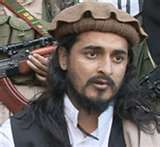
Taliban leader Hakimullah Mehsud (L) sits beside Humam Khalil Abu-Mulal Al-Balawi, the suicide bomber who killed CIA agents in Afghanistan on 30 Dec, in this still image taken from video released January 9, 2010

We continue to see conflicting reports from Pakistani authorities and TTP leaders/spokesmen on the
possible death of Hakimullah Mehsud, the leader of the Pakistani Taliban (Tehrik i Taliban Pakistan).

Bill Roggio at the Long War Journal provides two great updates on the situation here and here. Both sides have released public statements in the last 1-2 days, while US intelligence officials continue to provide no confirmation one way or the other. Today, Maulvi Noor Jamal aka Maulvi Toofan (a TTP commander who reportedly took over for Hakimullah) issued a statement saying, "Hakeemullah was neither killed nor I have been appointed acting emir of the Taliban."

Contrasting the Taliban statements, the Pakistani Interior Minister Rehman Malik also released a statement claiming he had "credible information" that Hakimullah was in fact dead, but he offered no concrete evidence. Unfortunately, Malik has been wrong several times before with his claims of dead insurgent leaders, in particular when he claimed that Hakimullah was killed in a clash back in Aug 2009 over who would succeed the recently killed Baitullah Mehsud.

Although no credible evidence exists either way (due in large part to the inability of Pakistani forces to even operate in the area where Hakimullah was reportedly killed - near the city of Multan), I believe that Hakimullah is in fact dead or gravely injured. The persistent nature of the rumors of his death have typically been enough to justify a videotape, but this time we saw a highly unusual statement at the end of January from Taliban spokesman Azam Tariq who claimed that the TTP didn't have to release a video to prove Hakimullah was alive. I strongly believe that if Hakimullah was able to make a video, it would have already been released by now to assuage concerns stemming from the rumors of his death. The lack of a video and the bizarre rationale for not releasing anything are in my opinion the strongest proof that Hakimullah is in fact dead (or so seriously hurt that he cannot be filmed in his current state).

Al Sahwa will continue to monitor the situation and provide updates as they become available.

07 February 2010

Possible Home Grown Radicalization Ties to Abdulmutallab

I read an interesting piece from the Investigative Project on Terrorism's website concerning possible home grown radicalization ties to the Christmas Day bomber. Read the full piece here. Abdulmutallab attended a two week course in Houston, Texas put on by the AlMaghrib Institute, in August 2008. While there is no direct evidence of any radicalization, the rhetoric from the Houston based director/national dean of academic affairs, Yasir Qadhi, is quite telling. I don't want to rehash the entire piece from the Investigative Project on Terrorism, but one of Qadhi's statements jumped out at me, "(AMI is) Trying to carve out a Western society among conservative Muslims-for Muslims to integrate into Western society but maintain their Islamic identity." This statement puts a lot of pressure on the State Department to counter this with our own Counter Narrative program.

An Anonymous reader, of my counter narrative piece, posted a link to the International Centre for the Study of Radicalization. Amm Sam, a primary contributor to their site, has a series of posts analyzing the British model for Preventing Violent Extremism (PVE) and Daniel Benjamin's use of the language "Countering Violent Extremism (CVE)". Amm Sam is still producing posts on this topic and I encourage the al Sahwa readers to read his work, Part 1, Part 2, Part 3, Part 4, Part 5. One of al Sahwa's most experienced readers, Dr. David Ronfeldt, also weighs in on Amm Sam's posts. I want to thank the anonymous reader for bringing awareness to Amm Sam's posts, this is by far the most rewarding aspect of al Sahwa.

Dan P and I will put our heads together, once Amm Sam finishes his series, and attempt to put forth a feasible coarse of action for reducing home grown radicalization. Stay tuned.

Who's Who the Terrorist Edition: Doku Umarov


Doku Umarov
Occupation: Emir of the Caucus Emirate
Born: April 13, 1964 (Wiki)
Education: Formal unknown, but he did step on a land mine and was able to keep his leg so I surmise he learned from that experience.
Employer: Self proclaimed Patriot for Chechnya
Career Highlights: One of the few remaining warlords left from the first Russian/Chechen war in 1996. 5th President of the Chechen Republic of Ichkeria following Abdul-Khalim Sadulayev death. Reformed the Riyad us-Saliheyn Martrys' Brigade after the previous commander, Shamil Basayev, was killed in 2006. The Riyad Brigade can be tied to numerous attacks throughout the Caucuses. Eventually took credit for the Nevsky train bombing on 14, August 2009.
Family: Married, 6 children
Address: Doku is Chechen by birth, so he will blend in better in Chechnya proper. Doku also retains a degree of freedom to move around in the neighboring areas of Dagestan and Ingushetia
Assessment Summary: Doku (Dokka) Umarov's stock continues to rise with the successful targeting of fellow fighter leadership, Ibn al-Khattab, Shamil Basayev, and most recently Mokhmad Mohamad Shabban. Doku provides a typical justification for his terror campaign, stating that as long as Russia maintains security presence in the Caucuses, he will lead the resistance. There is a seemingly constant level of terrorist activity against the FSB in the Caucuses, but the Nevski train bombing alludes to a shift in tactics. The Russians have shown an increased capability in thwarting large terror attacks like the Moscow theater siege or the Beslan massacre. This allowed the Russian officials to claim that the terrorism problem in Caucuses was under control. The Nevsky train bombing shows an extended reach for the Caucus Emirate, being the farthest terror attack north of Moscow. Expect a continuation of low sophistication terror attacks in an attempt to lower public opinion of the Russian security operations in the Caucuses.

05 February 2010

AQAP’s Expert Bombmaker: Ibrahim Hassan al Asiri

Abdullah Hassan al Asiri, perpetrator of the failed 27 Aug 09 suicide attack against Saudi Prince Muhammad bin Nayef and brother of Ibrahim Hassan al Asiri, assessed to be a top AQAP explosives expert and bombmaker.

As the US continues to develop a more in-depth intelligence picture of Al Qaeda in the Arabian Peninsula (AQAP), I wanted to provide some background on a potential high-value target who I believe serves as a key node in AQAP’s suicide bomber network. Ibrahim Hassan Tali al Asiri is a Saudi citizen currently assessed to be living and operating in Yemen. While his name is far from commonplace among most CT experts, he is someone we definitely should have been tracking based on his assessed involvement in AQAP’s two most recent high-profile suicide attacks. I assess that Ibrahim al Asiri serves as one of AQAP’s explosives experts and bombmakers – a critical position which requires a relatively high level of technical knowledge and experience. Most terrorist networks have few individuals with the necessary skills to fill this important role, making their kill/capture very valuable in terms of degrading the network’s capability.

Ibrahim al Asiri first drew attention after being named as the #1 target on Saudi Arabia’s “Most Wanted List,” which was released to the public in February 2009 [see an English translation of the list from the Saudi Embassy here]. Some online versions of the list that I was able to find also specifically list Ibrahim al Asiri as an “explosives expert.”

While his appearance on the Saudi list is important, things really start to get interesting when you take a look at the individual listed as #40 on the same list – Abdullah Hassan Tali al Asiri. As Christopher Boucek mentions in his recent article in the CTC Sentinel, Ibrahim al Asiri (#1) is assessed to be the brother of Abdullah al Asiri (#40). This relationship is confirmed in an article from the Saudi Gazette, which provides a profile of the entire family and explains how Abdullah (the younger brother) was recruited into AQAP by his older brother, Ibrahim.

If the name Abdullah Hassan al Asiri sounds familiar to you, it should. He was the perpetrator of the failed suicide attack against Saudi Prince Muhammad bin Nayef (the lead Saudi CT official) back on 27 Aug 09. Prior to this attack, Abdullah made contact with Prince Muhammad and claimed he wanted to turn himself in to Saudi authorities. Prince Muhammad agreed to meet him in person and during their meeting Abdullah detonated a PETN-based explosive device which was hidden in his underwear (which of course bears a striking resemblance to the TTP employed by Umar Farouq Abd al Mutallab during his failed midair attack over Detroit). Abdullah al Asiri was killed in the explosion, but Prince Muhammad bin Nayef was not harmed. Several weeks later, in fact, the prince met with top Obama CT officials to warn them of the growing threat from AQAP and provide details about the “underwear suicide bomb” TTP.

As we further unravel the key players involved in both attacks (the 27 Aug attack and the 25 Dec attack) and the methods employed, an article from Newsweek highlights a critical piece of information. The article quotes an unnamed US intelligence official who explains that, “U.S. officials now suspect that Nayef's attempted assassin and Umar Farouk Abdulmutallab, the Nigerian suspect aboard the Northwest flight, had the same bomb maker in Yemen.” Several pieces of evidence support this conclusion: 1) As Peter Bergen explained in an article at CNN, the explosives used (PETN-based) were virtually identical in both attacks; 2) The method of concealment (explosives hidden in the bomber’s underwear) was identical in both attacks; and 3) we know that the same group (AQAP) directed, planned, and resourced both attacks.

So, who is the most likely individual that played the critical role of bombmaker? I believe with high confidence that Ibrahim Hassan Tali al Asiri fits the bill. Additionally, I believe that he has likely constructed similar devices (or even improved versions) for use in future attacks that AQAP is planning against Western targets in the US, Europe, Saudi Arabia, and Yemen. Ibrahim al Asiri should become a top priority for US intelligence collection and targeting. His movements and communications will likely indicate the timing, target, and possibly attacker of any future attacks conducted by AQAP.

As multiple news sources have reported recently, the Obama administration has publicly warned of the impending threats against the US homeland (and other Western targets) being planned by AQAP [see articles from the NY Times, the Critical Threats Project, and STRATFOR for the best coverage of these threats]. While it’s clearly important to focus on targeting the AQAP top-tier leadership (Nasir al Wuhayshi and Said Ali al Shihri) and the recruitment/facilitation network being run by Anwar al Awlaki, I think the most effective way to disrupt impending attacks and prevent future attacks is to target the key node within the AQAP network who is absolutely necessary to provide the explosive device. I would venture to guess that as Umar Farouq Abd al Mutallab continues to provide intelligence to the FBI during ongoing interrogations, he is highlighting Ibrahim al Asiri as the individual who constructed the device he used during his failed 25 Dec attack. US intelligence and CT officials should immediately make Ibrahim al Asiri a high-priority target for collection and eventual targeting. This is our best way to stop the multiple attacks currently being plotted by AQAP.

04 February 2010

Crossroads: Al Qaeda & Biological Warfare, Literally


As has been linked on Challenge COIN and reported on The Long War Journal, a female suicide bomber killed 54 victims this past week in Baghdad during an annual pilgrimage to Shit'ite Islam's Holy Shrine in Karbala. The event was in celebration of the end of fourty days of mourning the death of Imam Hussein. (Read a fine historical description of Hussein and the tradition in the link provided). The female was wearing an abaya, covering herself from head-to-toe and thus successfully concealing the attached explosives.

The use of female suicide bombers is not new, but the question remains whether the tactic is a trend or a part of the terrorist toolbox. The Washington Post provides a listing of female suicide bombings in Iraq, five of which have been in Baghdad. In addition, see this report by ISI on activity throughout the Palestinian region. For further research, I suggest reading studies and papers from this academic guide, according to your particular interests.

This tactic is one of the many ways terrorists pierce US and ally national security methods, but [perhaps] one of the most dangerous aspects is its direct connection to socio-cultural traditions which are grounded by religious beliefs and practices. One of my advisors while a graduate student, Jocelyn Cesari, argues that tension continues to rise between Muslims and modernity. Currently, France is experiencing a struggle, once again: Shall the law permit Muslim women to wear a burka (usually interchanged with the term, niqab, meaning "veil") while in public space? The conflict is both internal, as Muslim women believe that wearing a burka is a religious testament to their behavior of modesty, and external, as politicians and citizens share their perspectives of national culture while security professionals argue that it presents a legitimate concern.
____________________________________________________________________

*It is an important aside from the discussion to present a brief understanding of the concept(s) inherent in the belief of Muslim women wearing such clothing. For your information, even though I studied such concepts, Muslim scholars [and believers] will, on many occasions, argue that my perspective and analysis is not legitimate simply because I am not Muslim; i.e. I cannot speak Arabic and thus cannot know true interpretation. I understand this perspective, respectively.

Muslims testify the origin mainly to one of three or all three sources recited in the Qur'an. As follows, shar'iah jurisprudence and/or theological interpretation extends this practice to devout Muslim women. Scholars, and the faithful Ummah, divide on what is necessary to be and remain devout.


(1) Verse 53 of Surah Al-Ahzaab, which states (abbreviated);
"O you who believe, do not enter the Prophet’s houses unless permission is granted you, to enter by invitation...But when you are invited, enter, and, when you have had your meal, disperse...And when you ask anything of [his] womenfolk, in other words, the wives of the Prophet(s), ask them from behind a screen, a curtain. That is purer for your hearts and their hearts, than [entertaining] sinful thoughts. And you should never cause the Messenger of God hurt, in any way; nor ever marry his wives after him. Assuredly that in God’s sight would be very grave, as a sin."

(a) Scholars argue that the verse offers restrictions as well as etiquette for Muslim men when having visited Prophet Mohammad's home. Further, it is taken to mean that the Prophet's wives shall not be coveted even after his death; for visitors needed to remain pure of heart. Lastly, the message sought to, at the time, dispel any false rumors about the Prophet and/or his wives that may ridicule him, his image, and/or message.

(2) Verse 59 of the same, Surah Al-Ahzaab, which reads;
"O Prophet! Tell your wives and daughters and the women of the believers to draw their cloaks closely over themselves (jalābīb is the plural of jilbāb, which is a wrap that covers a woman totally) — in other words, let them pull part of it [also] over their faces, leaving one eye [visible], when they need to leave [the house] for something. That makes it likelier that they will be known, to be free women, and not be molested, by being approached. In contrast, slavegirls did not use to cover their faces and so the disbelievers used to pester them. And God is Forgiving, of any occasion in the past when they may have neglected to cover themselves, Merciful, to them in His veiling them."


(a) Scholars hold that this serves as a command for men to prevent social abuse on behalf of their wives. As above, it is extended to all faithful men and women who believe such behavior is devout in the name of Allah and the Ummah.

(3) Verse 31 of Surah an-Nur, which reads;
"And say to the faithful women to lower their gazes, and to guard their private parts, and not to display their beauty except what is apparent of it, and to extend their headcoverings (khimars) to cover their bosoms, and not to display their beauty except to their husbands, or their fathers, or their husband's fathers, or their sons, or their husband's sons, or their brothers, or their brothers' sons, or their sisters' sons, or their womenfolk, or what their right hands rule (slaves), or the followers from the men who do not feel sexual desire, or the small children to whom the nakedness of women is not apparent, and not to strike their feet (on the ground) so as to make known what they hide of their adornments. And turn in repentance to God together, O you the faithful, in order that you are successful."

(a) One additional point of meaning exposed here is that women could only shown themselves to close relatives, a practice believed to have originated with the Prophet.

____________________________________________________________________

Debate is on-going concerning the use of heightened security measures to prevent terrorist attacks on the US homeland vis-a-vis international and domestic flights; in particular focus is the topic of body-image scanning devices by TSA in airports. Just as professionals and analysts work hard every day to stay ahead of the morphing enemy, so too do AQ planners and operatives. Yet again, a new method uses biological implants of PETN. And yes, scientific experts believe that full-body devices will not be able to see tiny explosive packages hidden within muscle, tissue, cartilage, and/or organs.

It is a different tactic - and a step above - than that previously used by the "Butt Bomber," Ibrahim Assiri, who inserted explosives into his rectum; or the underpants bomber, Farouk Abdulmutallab. Now, Muslim doctors are returning to aid AQ after receiving top-notch medical training in Europe, this time to surgically implant PETN into women's breasts. It is probable, of course, that this tactic is not limited to women, as we should deduce that men may receive implants in, for example, their buttocks.

The connection of terrorist attack methods, then, however great it is to socio-cultural factors, is also related to criminal methods used in operations such as trafficking [which my colleague, Josh, also discussed here].

So, what to do?

As I discussed previously on countering AQ's Phase IV Strategy, "...the deterioration of all US/Western economic and legal structures lies at the heart of the long-term strategic plan of AQ. This method of deterioration that causes our confusion will increasingly be paired with direct attacks on the US homeland." I established here that the deterioration is also connected to socio-cultural traditions, that which is defined/shaped in many ways by the legal and economic frameworks practiced by our great nation.

For one, we can begin by coupling information warfare with civic engagement, as my colleague, JD, argues. Internationally, it requires military campaigns that build, as my colleague, Pat Ryan, names, sharia networks.

For example, an interesting blog entry posted on the U.S. Naval Institute webpage argues that a successful counter-method would circulate propaganda amongst jihadi men (via many sources I assume) highlighting the humorous aspect(s) of biological undertakings to manipulate their ego; sexual id (Frued). It would also create dirty psychological associations in the citizen mind, which would arguably dissipate social approval. Although I do not agree entirely that all male jihadi suicide bombers are, by default, "sexually-repressed beings," I do see the value in exploiting weaknesses, either cultural and/or psychological, but emphasize the need to evaluate exactly who we are targeting so we can accurately script the information for warfare.


Can it work for female suicide bombers? We can strenthen our understanding by identifying, once more, which AQ affiliates use female suicide bombers and why.


We need to continue to be aware of the forthcoming threats facing the US homeland, as women will even pretend to be pregnant in order to hide explosives. So, it does not only require military and intelligence agency operations in regions such as Yemen, as well as national security measures taken by, for example, the US Secret Service, to examine and predict modus operandi of bombers targeting US presidents and political VIP's, but also [perhaps above all] individual and collective integrity to remain firm to the ideals of who we are, what we do, and how we do it.

No one can ever blow that up.

02 February 2010

Terrorists Dream About The Islamic State: Al Qaeda, Al Shabaab, & Beyond

*This is the first section of a two-part post, the second of which I plan to publish later today. Here, I focus my efforts on identifying the expansion of terrorist operational environments as represented in the relationship between the Al Shabaab Mujahideen Movement and al-Qaeda's morphing strategy.

Yes, terrorists groups dream about establishing an Islamic State; for it is not only a fantasy but a mission they seek to achieve through endless jihad, The Long War. If the US and its allies understand clearly how terrorists groups like Al Shabaab understand themselves as a part of the self-perceived "infidel" conflict, then there is valid reason to think that analyts and professionals can accurately project their strategic intentions and operational objectives.

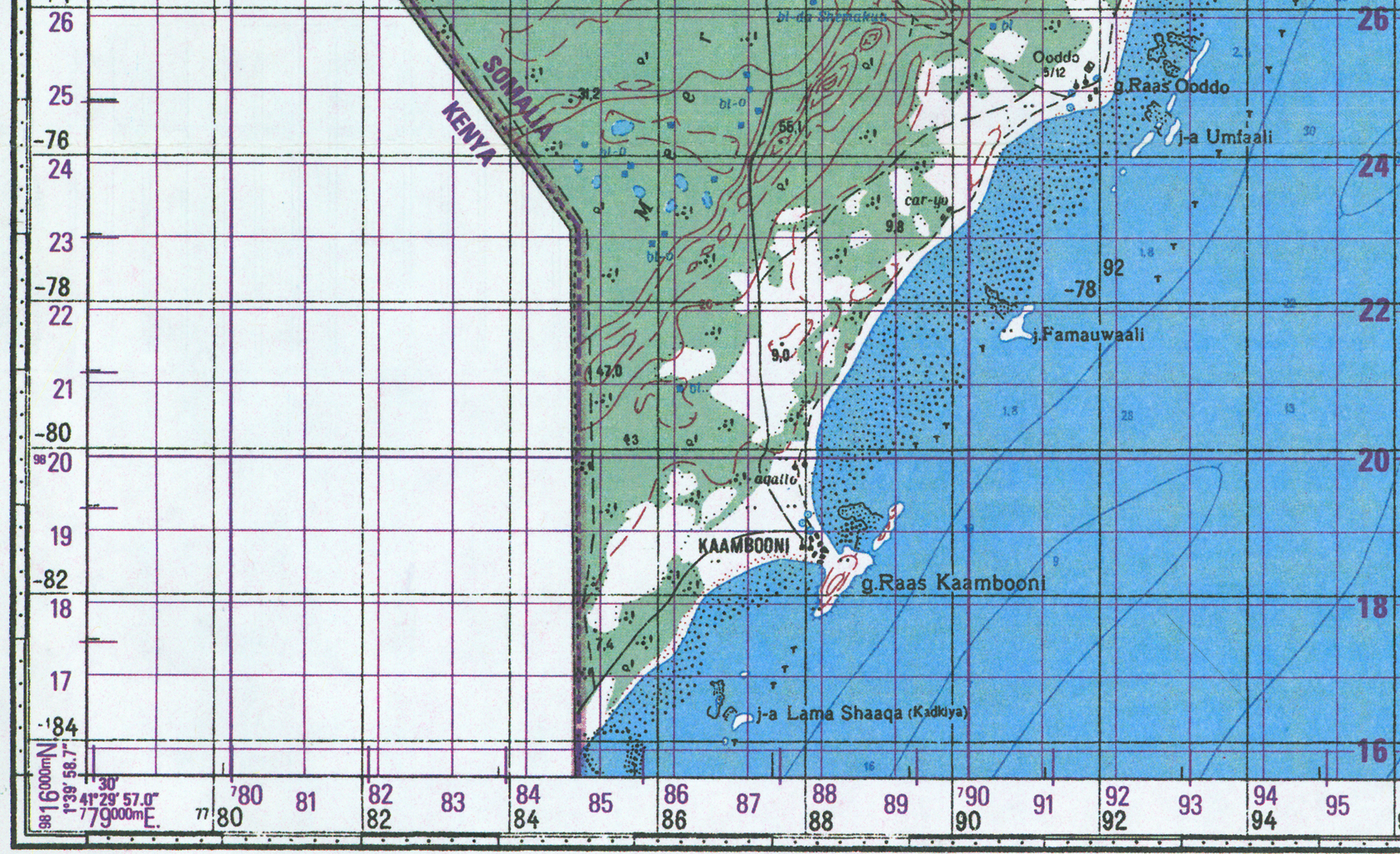
Bill Roggio of the Long War Journal reported that the Ras Kamboni Camp (Raas Kaambooni), led by Hassan Turki, of Hizbul Islam was absorbed by Al Shabaab . (It comes as no surprise that the information was reported in Sweden from Al Qimmah Forum, as financier Ali Yassin Mohamed reportedly resided in Stockholm. See how the country is experiencing a "little Mogadishu"). The announcement declared two things; that,
(a) Al Shabaab is a part of the international jihad led the the network of Al Qaeda [and]
(b) The Al Shabaab Mujahideen Movement and the mujahideen of Ras Kamboni Camp today merged under one name: Al Shabaab Mujahideen Movement (ASMM).

The two organizations have been fighting one another throughout the ending months of 2009 over the control of the Port of Kismayo in southern Somalia. The successful merger now splits Hizbul Islam, leaving three remaining original members to fight for themselves;
(1) Alliance for the Re-liberation of Somalia (ARS);
(2) Jabhadda Islamiya Somalia, a.k.a. Islamic Front of Somalia (JIS);
(3) Mu'askar Anole;
all of who are connected to the Islamic Courts Union (ICU) which I mentioned in my analysis on the US/UN Operation Restore Hope.

With a blended unification of ideology, the overarching goal is two-fold: To rid the region of "enemies of their religion," who ASMM believes to be both Ethiopian forces aided by the US, and institute an Islamic State in Somalia. Moreover, it identifies their forthcoming ability to join operational tactics and expand operational environments, both within Somalia and transnationally vis-a-vis supporting campaigns with, for, and by AQCL. Of great concern also is the newly-formed organization's prospective capacity to manipulate regional resources, such as Uganda’s oil reserves or Lake Victoria near-by, and/or utilize geographical avenues for trafficking activities as they have done in the Gulf of Aden.

Despite the internal conflicts between Al Shabaab and Hizbul Islam historically, their recent formation testifies to the dangerous, morphing method of expansion by AQ-affiliated terrorist groups in the region. A recent RAND report entitled, "Radical Islam in East Africa 2009," acknowledges this growing trend and the emerging implications, stating;
"East Africa has been a sanctuary and base for Islamist terrorist operations since the early 1990's and remains a priority area in al-Qaeda's global strategy...Although al-Qaeda represents the primary terrorist threat to US interests in East Africa, it is only one component of a much larger universe of radical Islamist groups and organizations in the region. There are numerous indigenous radical Islamist groups in East Africa with varying degrees of affinity to al-Qaeda's agenda. In addition, missionary groups...are actively propagating a radical, fundamentalist, Salafi interpretation of Islam that, while not necessarily violent, function as gateways to terrorism...The weakness of African governments and the internal fighting and corruption of these regimes facilitate the ability of terrorists to move, plan, and organize."

The larger picture sets ASMM and AQAP as singular but interconnecting movements across the chessboard, the entire AQCL operational environment. Each entity of the bigger organization is morphing into con-joining units like a serpent tongue: The main portion belongs to the snake but the ends are separated like a fork. As I stated on 15 January, a "fork" is a chess tactic using one piece to attack two or more pieces. It is a critical to AQ's forked tactical ability - how they "move, plan, and organize" - to expand rapidly. Al Shabaab and Hizbul Islam's merger showcase AQ's ability to spread eastward toward AQAP in Yemen and westward toward AQIM in North Africa, as these geographic locations are key to the "exchange."

It is a strategic necessity for the US to take aim at middle-tier personalities [while they exist] in order to disrupt and dismantle affiliate operations. History's lesson of the mujahideen throughout Africa and the Arabian Peninsula offers some intriguing evidence of what "dream-like" expansion seems to be on the horizon in terms of the jihadi operational environment.

Pakistani Taliban Leader Dead?

Reports continue to circulate claiming that Hakimullah Mehsud, the current leader of the Pakistani Taliban (Tehrik-i-Taliban Pakistan), is dead after suffering wounds from a mid-January drone strike. Several Pakistani officials have claimed that Mehsud had died sometime at the end of January based on "word of mouth" (aka HUMINT) confirmation, according to a report today from ABC News. However, US intelligence officials have yet to confirm the EKIA reports and the TTP was quick to issue a statement denying the death of their leader. According to Bill Roggio at the Long War Journal, reports of Mehsud's death are premature. Hakimullah's spokesman (Azam Tariq) issued a statement saying, "Hakimullah is alive and safe." Additionally, one of Mehsud's subordinate commanders, and a potential successor, (Qari Hussein Mehsud) called the Pakistani press to issue a similar statement.

For further background on Mehsud and the key role he plays within TTP, check out JD's excellent profile here and this article from the CTC Sentinel.

If in fact the reports are true, we are likely to see another potential struggle over who would take over leadership of the TTP (similar to the reported infighting that occurred after the August 2009 death of the former TTP leader, Baitullah Mehsud). The top three contenders to assume the key role include:
  • Wali-ur-Rehman, the young deputy leader who functions as the group's operational commander

  • Qari Hussein, who oversees the suicide bomb program and is Hakimullah's cousin

  • Saeed Khan Mamozai, a local commander from Orakzai tribal agency
Al Sahwa will continue to monitor open-source reporting and provide updates and analysis on this critical story as more information becomes available.

01 February 2010

Crossroads: Jihadi Infiltration in the US

*Disclaimer: The information provided for readers in this posting does not serve as either my personal or professional advocation for the work and/or the views expressed by the authors and/or participants in association with the work undertaken. It is provided objectively as a resource for exploring information and perspectives in order to arrive at the truth. Furthermore, those that mistake my concluding points as arguments against the Muslim community are wrong; I simply intend to focus my analysis on the threat of jihadi persons and groups within US communities and agencies, not the Muslim Ummah and their social, cultural, political, and religious beliefs, traditions, customs, and structures.

My colleague, JD, analyzed the use of "Counter Narratives" for the establishment of federal-level engagement teams under the direction of the Department of State. Given the need for coalition building between (a) federal law enforcement and policy agencies and (b) Arab and Muslim leaders and citizens, narratives can constructively undertake information warfare.

As I discussed last Friday, it is becoming ever more clear that Al Qaeda's Phase IV Strategy incorporates attacks on US economic and legal frameworks as well as emerging US-domestic operational environments. This is being witnessed internationally, too, as the Taliban, AQAP, and Al Shabaab step-up their transnational terrorism efforts in alignment with AQCL ideology. It is in our national security interest - and the interest of the world - to prevent AQ from establishing safe havens in poor socio-economic regions; as we must protect peoples from their false promises. (See more insight on Economics and Terrorism from Abu Muqawama at CNS)

Combating jihadi propaganda through counter-narratives promises to (a) drive down AQ popularity by (b) crystallizing ethnic differences and (c) promoting collaboration to further a unified message-scheme. It will, as David Bellavia writes in his post entitled, "The Backbone of Islam," "...unmask al Qaeda" for what it really is.
The question remains, however, whether information warfare can unravel what Bill Whittle argues to be "Islamic Infiltration" in his latest report. See Part Two here.

The FBI is no stranger to moles; just ask about Robert Hanssen who sold millions of dollars worth of intelligence to Soviet spies. His trecherous activies cost lives as well as billions of dollars. Then-FBI Director, Louis J. Freeh, stated in a 20 February 2001 Press Release, "This kind of criminal conduct represents the most traitorous action imaginable against a country governed by the Rule of Law."

The crossroads of US and Islamic Rule of Law and Shar'iah's interwoven elements (i.e. "Shar'iah-Compliment Finance" discussed in the link provided) is exactly what Whittle's report brings into question, and that which Frank Gaffney of the Center For Security Policy has been covering for years.


The former Department of Defense analyst quoted in Whittle's video states;
"...[O]ver a long period of time I ended up collecting a large body of Islamic law, an enormous amount of it available in English, and realized that if Islamic law is the criteria by which you measure legitimacy or illegitimacy you can’t show that the moderates have a doctrinal basis for the position they hold, and you can’t show that on the statement of the law the radicals are wrong."
As a result, the unidentified analyst argues, "...the whole [US] national security apparatus...moved from a factual, legal basis to one that supports the narratives." The juxtaposed narratives of righteous Muslims and jihadi extremists need to be understood and clarified to arrive at what is virtuous and true. This is exactly what I think JD attempted to analyze and provide a strategic framework for in order to secure US social, cultural, and political prosperity.

We ought to worry about the infiltration of jihadi ideology throughout US demographics as much as operatives within US federal agency ranks. It is the task of security professionals to divide and conquer moles; it is a separate but just as integral task of citizens to identify and report on questionable activity. This is precisely the reason why the Intelligence Community should find it in their best interest to integrate a realistic system for identifying the religious and social behaviors of radical jihadists. Civic engagament teams can help strike a balance between encouraging what is safe and identifying what is harmful, that which decays and that which prospers. Policy debates ought to surround the questions, "What is the balance of allowing and encouraging diversity of thought and practice while disrupting and dismantling jihadi propaganda?"


Increasing social and cultural awareness requires a thorough analysis of what we have been witnessing for some years now in England, France and Germany, who are experiencing emerging AQ threats as well as tensions between regional/national heritage and customs of the Muslim Ummah and Shar'iah Law. Analysts and professionals alike are bound to become more frustrated in differentiating between righteous customs and jihadi customs if we fail to deciphere between efforts of propaganda and democratic prosperity. Such work can, as I said, (a) crystallize ethnic differences and (b) promote collaboration.

In one of my upcoming posts, I will elaborate on the FBI's Community Outreach Program in order to assess how JD's engagement teams can strategically counter jihadi narratives (i.e. exposed in false sharia fatwas that are not legitimate) through civic coalitions. This will, I think, holistically strengthen the ability of CT professionals to track, monitor, and interrupt actual and/or potential moles in agency rank and file and radicals moving throughout regional areas of society.

Nigeria: From Hero to Zero in 2010?

Sorry for the hiatus, I’m in the middle of a PCS (permanent change of station, i.e. move, for those of you who do not live and breathe acronyms) out of Fort Sill and on to greener pastures.

In December I covered two disparate insurgencies in Nigeria, Boko Haram and the Movement for the Emancipation of the Niger Delta (MEND). It’s well past time for an update.

1. MEND called off their ceasefire with the Nigerian federal government on January 30th. The same day a Shell pipeline was “sabotaged” by MEND gunmen and then shut off. President Umaru Yar’Adua brokered the ceasefire with MEND in mid-2009, but then was hospitalized in November and has remained so since.

2. Religious violence in the central city of Jos peaked in the middle of January with somewhere in the ballpark of 500 killed. A week later VP Goodluck Jonathan ordered in the Army to quell the ongoing sectarian violence between Christians and Muslims.

3. Pirates in the Gulf of Guinea are making valiant efforts to supplant Somali pirates as the scourge of the seas around Africa. It’s too early to tell if the pirates are a part of or affiliated to MEND, but MEND has a well-documented history of attacking offshore oil platforms with speedboats.

A weak central government, sectarian violence, cancelled ceasefire and piracy all equals a troubling recipe for Nigeria. As MEND reemerges following its cancelled ceasefire, they will undoubtedly look to push their fight against international energy companies further offshore. The group needs international media attention to put pressure on the central government, and attacks on international oil companies are a prime means to their end. Through the prism of current conditions in Nigeria, with an even weaker central government and Christian-on-Muslim violence, the death of Boko Haram leader Mohammed Yusuf in mid-2009 may end up being particularly troublesome. I expect to see greater penetration into Northern Nigeria by al Qaeda in the Islamic Maghreb (AQIM), as they perceive a weakened central government and threatened (and large) Muslim community will provide fertile grounds for expanded efforts in West Africa.

Bottom line: Nigeria will quickly face a quickly deteriorating situation unless the government is able to clamp down on MEND, quell sectarian violence, reign in young Muslims who feel the central government is reaching out too much to the West and reassert its dominating, yet moderate, position inside its borders.

29 January 2010

Terrorism on Trial: Countering AQ's Phase IV Strategy

There has been buzz in the news throughout the morning about the legal framework US authorities, led by the Department of Justice, ought to use to try terrorists. Al Sahwa has previously explained the main options available while discussing the case of Nidal Malik Hasan.

The reporting, and accompanying conversation, is circling the case of
Farouk Abdulmutallab, the Christmas Day, underpants, would-be bomber. The Washington Post has two articles here and here that beg us, once again, to question the interconnecting elements of terrorism with our Constitution - as well as our social fabric and the values and traditions celebrated by them.

You may read complimentary articles on Khalid Sheikh Mohammed's (KSM) trial from the
NY Times, and/or the implications for our prison population (that I discussed previously in the link provided) from the Philadelphia Inquirer.

I propose beginning with the U.S. Constitution, in particluar
Article I, Section 8, which establishes the right of Congress "to constitute Tribunals inferior to the Supreme Court." Moreover, the definition of "Piracies and Felonies committed on the high seas" should be understood to descriptively include Terrorism committed on land, seas, and air. Such an alteration can successfully give way to "make[ing] Rules concerning Captures on Land and Water" which shall also include airspace.


The intention and purpose is to provide the preservation of liberties and protection of their daily engagements of, by, and for U.S. citizens.

On this last point, cases such as Abdulmutallab and KSM's raise the importance of the possible utilization of habeas corpus if/when not suspended during terrorism trials.
Article I, Section 9 states, "The Priviledge of the Writ of Habeas Corpus shall not be suspended, unless when in Cases of Rebellion or Invasion the Public safety may require it."

Please see legal information of U.S. Code, "the codification by subject matter of the general and permanent laws of the United States," pertaining to habeas corpus
here.

It is clear in the language used by the drafters and signers of the Constitution that the Founding Fathers, Statesmen, and citizens framed their arguments according to the possible perils they faced on land and water. As such, the definition of "making rules" for capture followed the logic inherent in their own language. Thus, "terrorism" is not mentioned and/or defined simply because the trecherous activity was not in and on the minds of the US leaders and citizens.

As we all have known for some time, US leaders and citizens face threats unfamiliar and unimaginable to the Founders. In light of the practicality sought by the Obama Administration on matters of law and terrorism, it is of utmost concern to raise further questions bound to the aformentioned constitutional concepts.

Firstly, what is the meaning of the independent right to life as a US citizen, and the adjoining rights possessed by one's citizenship? Amendment XIV, Section 1 grants to citizens naturalized rights. If terrorists are granted miranda rights, tried in civilian court [and convicted or acquitted], then by default what other rights shall be granted to suspected terrorists? Common sense tells me that constitutional rights grant me equal protection of the laws, but that equality can not be shared by foreign, enemy combatants.

Secondly, shall the US provide comprehensive rights to suspected terrorists being tried in civilian court? Amendment VI grants persons being tried in criminal prosecutions, for example, the right to a speedy trial and public trial. This must be judged by an impartial jury. Shall we also, then, apply the Brady rule if a terrorist or his/her [public] defender think evidence was withheld? (Also see Brady and its probable implications for terrorism trials here and here). Common sense tells me that the circumstances particular to a US citizen's trial rightfully imply a speedy, public trial, but that presumption of innocence can not be prescribed to foreign, enemy combatants.

Thirdly, and lastly, if suspected terrorists are granted any amount of rights also held by US citizens (gained through birth or application), when are the accused terrorists in fact charged with treason as holders of US rights? Article III, Section 3 states that all persons "levying War...or in adhering to Enemies, giving them Aid or Comfort" shall be charged with treason. Common sense tells me that the Attainder/Conviction of treason leads back to the situation suspected foreign terrorists face in the first place: "The loss of all civil rights by a person sentenced for a serious crime."

It is important to note that an attainder can apply to both an individual and group. According to the Constitution, an attainder results in the sentencing of the convicted to death.

The argument is being made that "broad consensus" holds that terrorism trials are best decided on a case-by-case basis (pg. 5). Must we, then, form courts and complimentary structures, systems, and procedures to meet the demands of such variety? For example, what is the difference in trying US citizens compared to enemy combatants when considering Al-Awlaki, a US-born, AQAP, radical Islamic cleric? What ought we to say about or how ought we to decide on Nidal Hasan or Abdulhakim Muhammad?

Margaret Thatcher said in a 1981 speech, "To me consensus seems to be the process of abandoning beliefs, principles, values and policies in search of something in which no one believes, but to which no one objects—the process of avoiding the very issues that have to be solved, merely because you cannot get agreement on the way ahead."

Sadly, I think the deterioration of all US/Western economic and legal structures lies at the heart of the long-term strategic plan of AQ: It is what makes us great, and that which AQ seeks to attack. This method of deterioration that causes our confusion will increasingly be paired with direct attacks on the US homeland. We have the will and the power to prevent both; to protect, preserve, and prosper.

28 January 2010

Leaked QDR Draft

A draft copy of the QDR was recently leaked. CPT Hyphen tweeted a link to the Small Wars Journal, who provided a link to Abu Muqawama, who grabbed it from Inside Defense.com, who had the document originally leaked to them. So I thought why not us! Its more rewarding if you start at the CPT Hyphen tweet and follow the cyber trail.

27 January 2010

The Yemen File: Promising Beginnings for 2010

Abdul Mutallab thrust Yemen into the lime light, thus increasing the media's coverage of our attempt at a collective solution in 2010. It is important enough for Secretary Hillary Clinton to be in London tonight, instead of attending the State of the Union address. Jeffrey Feltman, Assistant Secretary, Bureau of Near Eastern Affairs, appeared before the Senate Foreign Relations Committee in late January to provide the State Department's way forward. Feltman outlined a two front strategy that focuses on strengthening the government's ability to provide security, and address the economic crisis. Surprisingly, there is more information about our counter terror efforts than our economic efforts.

The Washington Post sheds some rare light on the counter terror partnership between Yemen and the United States, here. Yemen will most likely be a successful template for future terror hot spots. The US footprint on the ground is minuscule, which allows the host nation government a degree of deniability. This should prevent a mass appeal for disenfranchised Yemenis to attack Ali Abdullah Saleh's government due to having Western soldiers on their land. The soldiers and civilians who are supporting Ali Abdullah Saleh's CT efforts are second to none. In addition to man power, our government will pony up $63 million solely for increased security efforts. We will continue to see success by enabling Yemen's lethal targeting against AQAP, here, here, here, and here. Where I am most concerned is the economic front, Jeffrey Feltman's second front.

The Yemeni government quantifies their economic needs as $50 Billion of aid over the next 10 years. The Yemeni calculus behind this figure is what they believe is needed to raise their rank on the list of the least developed countries. Today in London, World leaders are meeting to discus ways and areas that the collective community can pull Yemen from the brink of economic collapse. The United States is pressuring Saleh's government to follow a 10 point plan to improve economic and government accountability. This is a crucial aspect. The reason being, Europe and the West pledged over $5 billion in aid, but only 20% ever made it to Yemen. The corruption in Yemen is so great that it basically equates to lining Yemeni pockets with aid money. If the US and other world leaders fail to fix the corruption aspect, we will never be able to stop the inevitable disaster heading for us when Yemen runs out of oil, in 2017. Secretary Clinton is also making the cease fire for the Houthi Rebel conflict a top priority. The conflict with the Houthi Rebels alone soaked up over 10 million dollars in aid from the USAID and the Office of Foreign Disaster Assistance.

I tittled this post "Promising Beginnings" because I believe Yemen may be the first true holistic governmental approach to foreign policy from the United States. The right military foot print is in place and the State Department can effectively act in Yemen due to the size of the problem. Iraq and Afghanistan were just too big for the State Department's budget and personnel size to effectively handle. Al Sahwa will continue to follow Yemen closely, stay tuned.